Meet Mother Jones and her Children’s Crusade
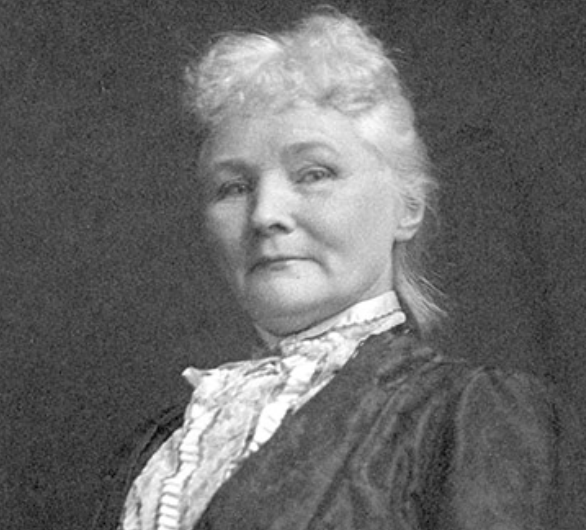
Mary Harris “Mother” Jones, celebrated in my backyard and worldwide
Aren’t we lucky?
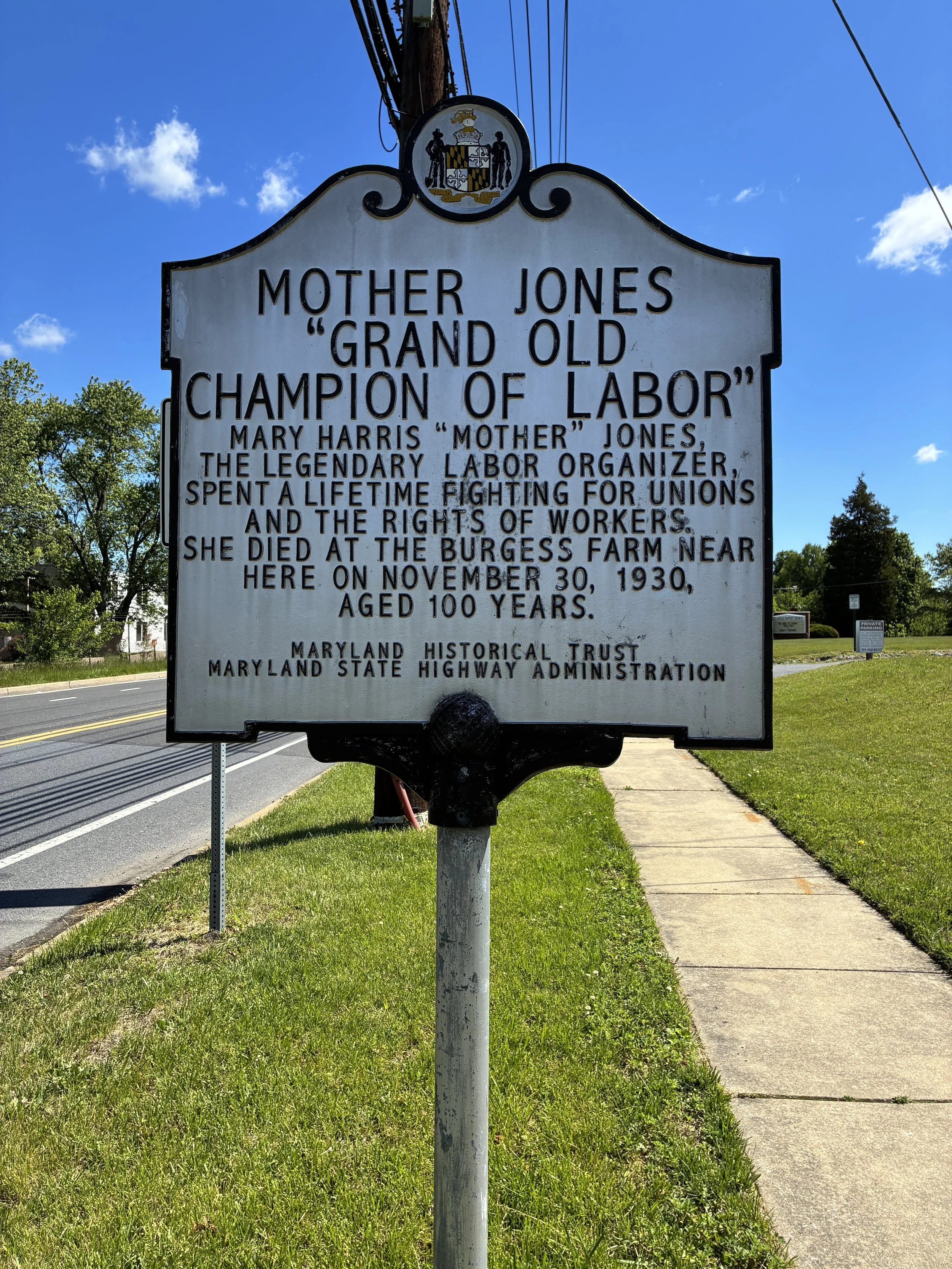
Anybody in the DC metro area can visit this marker and pay respects to a labor giant, Mary Harris “Mother” Jones, who spent her last years and died in Adelphi in nearby Prince George’s County. As the marker near the well-traveled Riggs Road and Powder Mill Road notes, this spectacular woman spent her life—up into her 90s!—championing workers of all kinds treated unfairly.
She’d travel to workers and their families scourged by poverty from heinous jobs in coal mines and steel and textile mills, living among them in freezing tents and tenements. Like the fiercest mother, she’d fight for them, going toe-to-toe with the most powerful, from the local mine owner and their fat-cat corporate bosses to lawmakers, from local mayors going up the President.
For decades, Mother Jones commanded headlines across the US (and world) and was known as “The Most Dangerous Woman in America,” as is titled her excellent biography by Elliott J. Gorn.
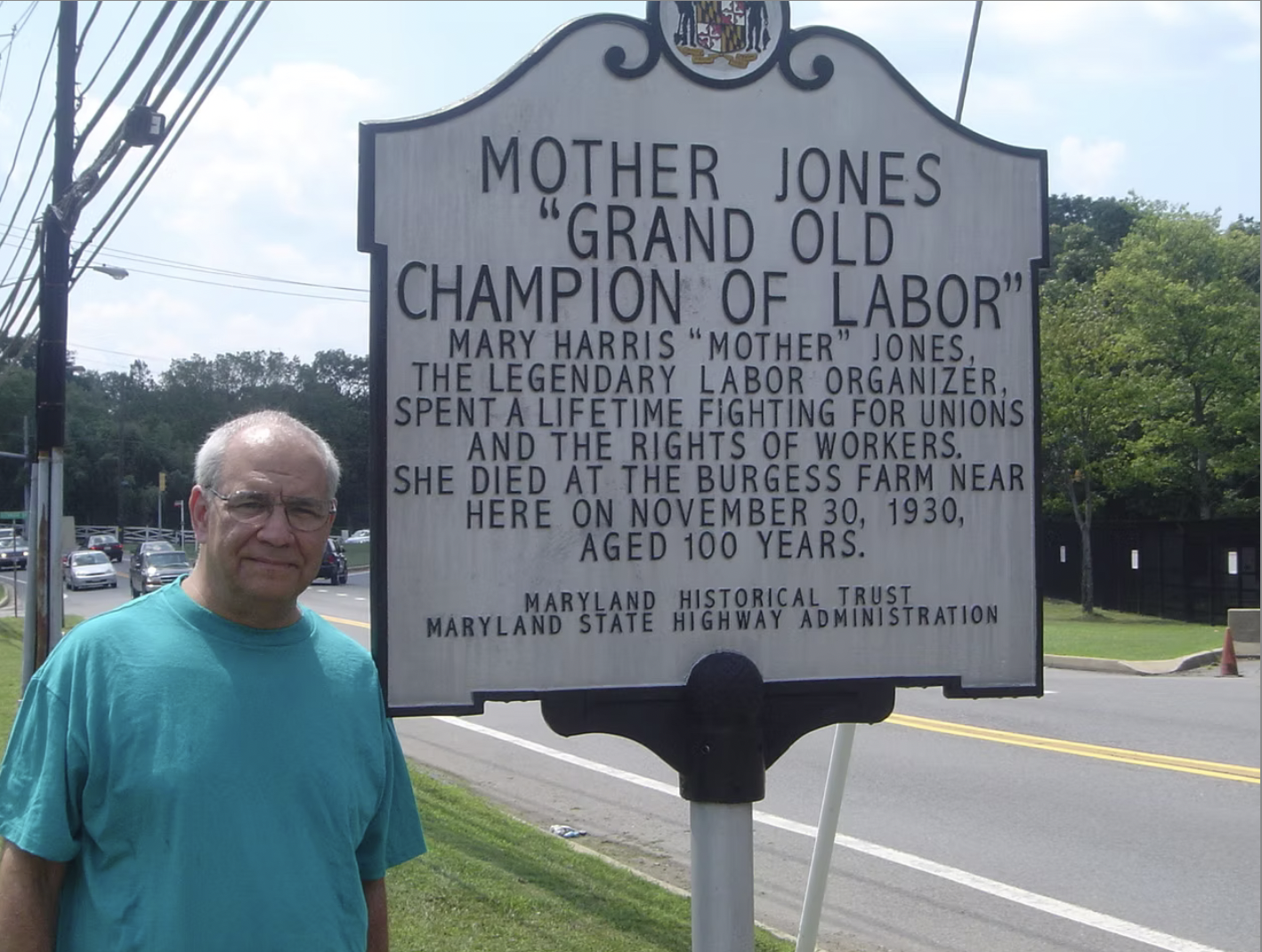
Saul Schniderman made Mother public here.
When I see PUBLIC history about an amazing human I admire, I am thrilled, and I’m grateful to those who made that public history public so that folks know about the true s/heroes who’ve made our communities better. Thanks to labor historian Saul Schniderman, cofounder of the Labor Heritage Foundation and supporting labor organizations for this marker and for work to keep alive the history and legacy of Mother Jones!
For me, there’s nothing better than visiting and bearing witness to a spot where awesome people did awesome things. I’m planning a short caravan to a few sites in the whereabouts of Mother Jones’s Adelphi marker, including our elementary school named after Mother Jones. Message me if you’re interested.
Heard of the Children’s Crusade?
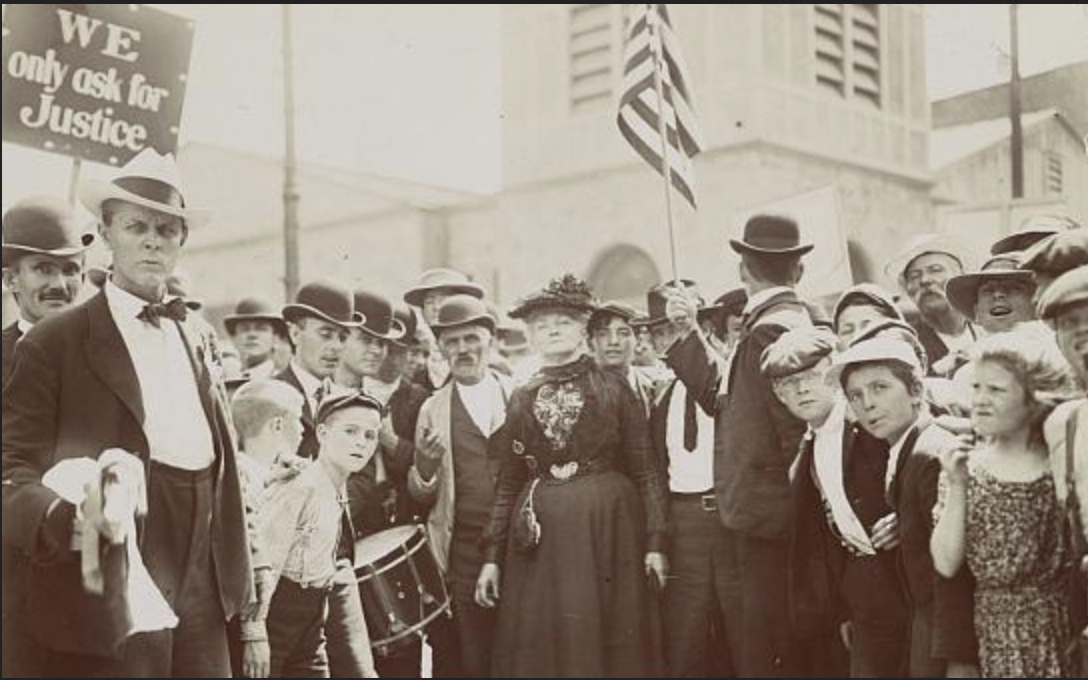
Mother Jones and “Mother’s Army” set out from Philadelphia.
I was delighted to pilgrimage to several Mother Jones activism sites recently when my husband and I drove up to Long Island to visit family. We stopped at some spots where Mother Jones led her inspiring and ingenious Children’s Crusade march in 1903. “Mother’s Army,” a band of kids and adults, marched and educated folks along the way from Philadelphia to Long Island, where President Teddy Roosevelt retreated to his summer mansion. Mother Jones was 66 years old as she led this long slog!
Many thanks to the Mother Jones Museum folks, who made my trip destinations easy to find. Check out their treasure trove of info about the life and journeys of Mother Jones. And thanks to the great info about Mother Jones and many other labor s/heroes at We Never Forget: The Labor Martyrs Project.
But before I start my Children’s March foray, a bit more about the life of Mother Jones.
Everyone should know about Mother Jones!
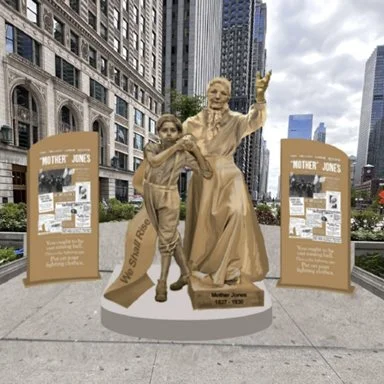
Soon in Chicago: “We Shall Rise”
Many, many Americans have no awareness of Mother Jones and her work. That’s why it’s so important that highly visible markers and monuments keep on coming. Cheers to labor historian Rosemary Feurer and others at the Mother Jones Museum who worked for this statue of Mother Jones and a child—titled “We Shall Rise”—at Chicago’s iconic Water Tower. It’s scheduled to rise next year; you can make sure it does by donating toward the cause.
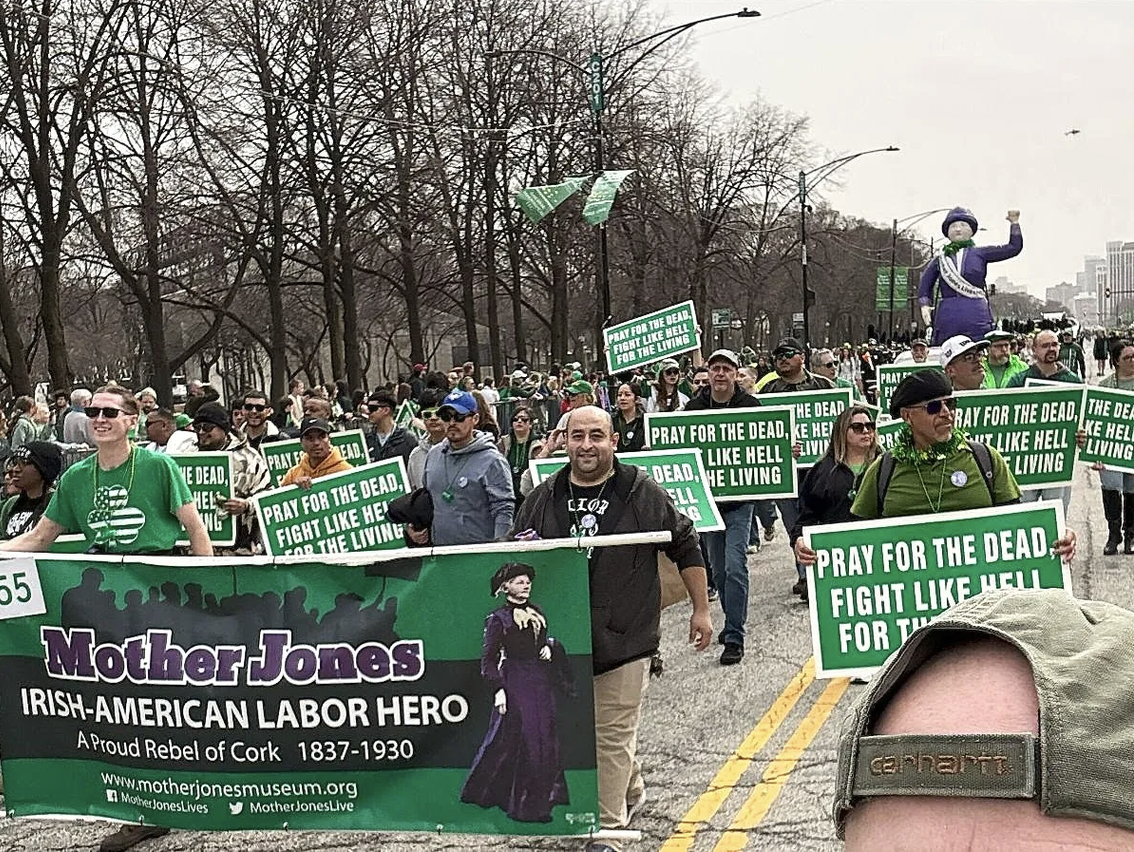
Mother marches in Chicago’s St. Pat parade
Chicago fans, particularly the Irish folk, have kept her memory thriving over many years. She and her legacy are celebrated at events such as this float at the 2025 St. Patrick’s Day parade.
And anyone can make her public by bringing a representation of her to actions and events, such as the portable Mother Jones Museum Mother that makes the rounds at various activities such as strikes and protests.
Keeping Mother Jones vibrant in her birthplace
Mother Jones love pours out in her native Cork, Ireland, where she is beloved and celebrated year-round with a huge festival and summer school in late July around Mother’s birthday.
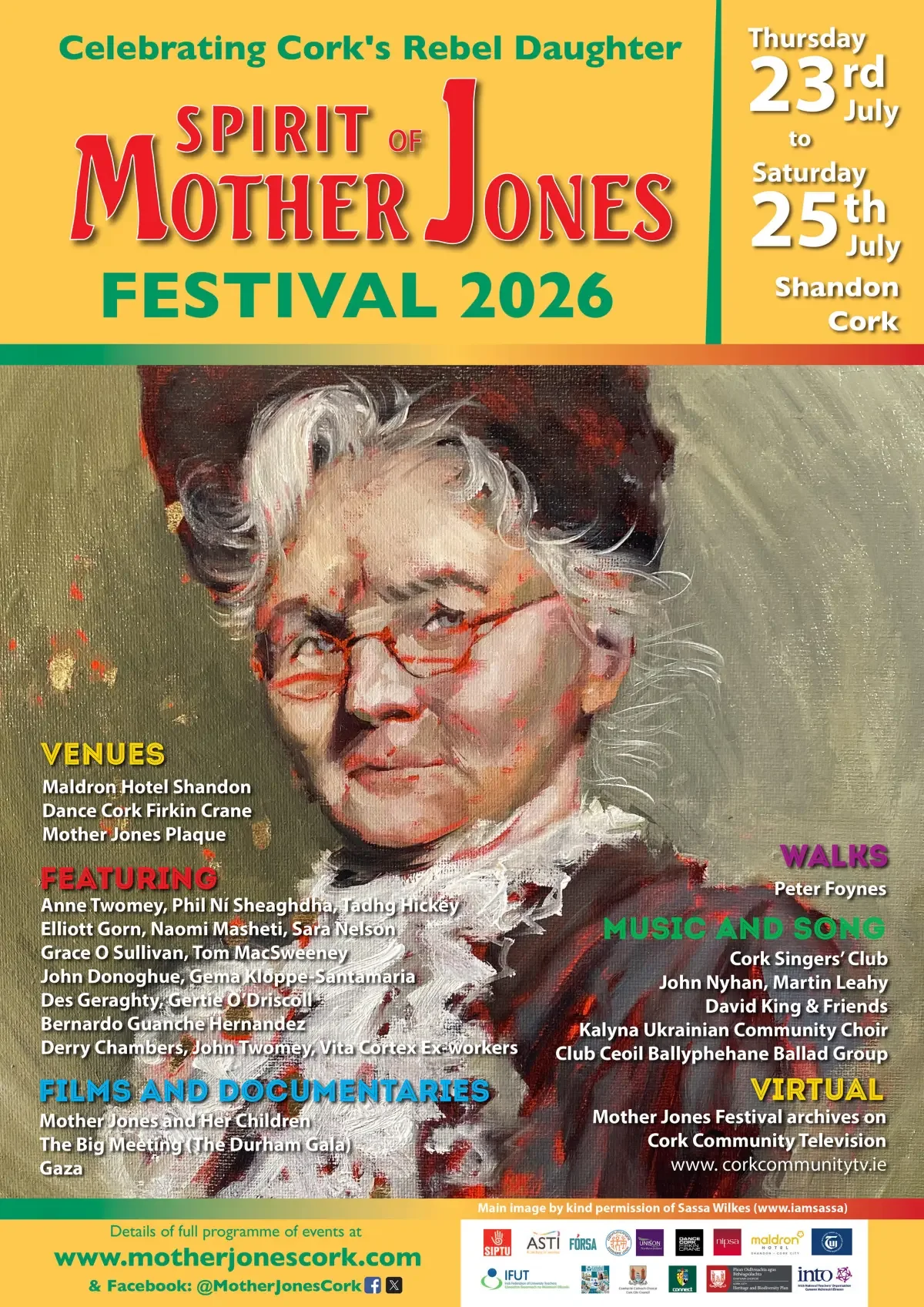
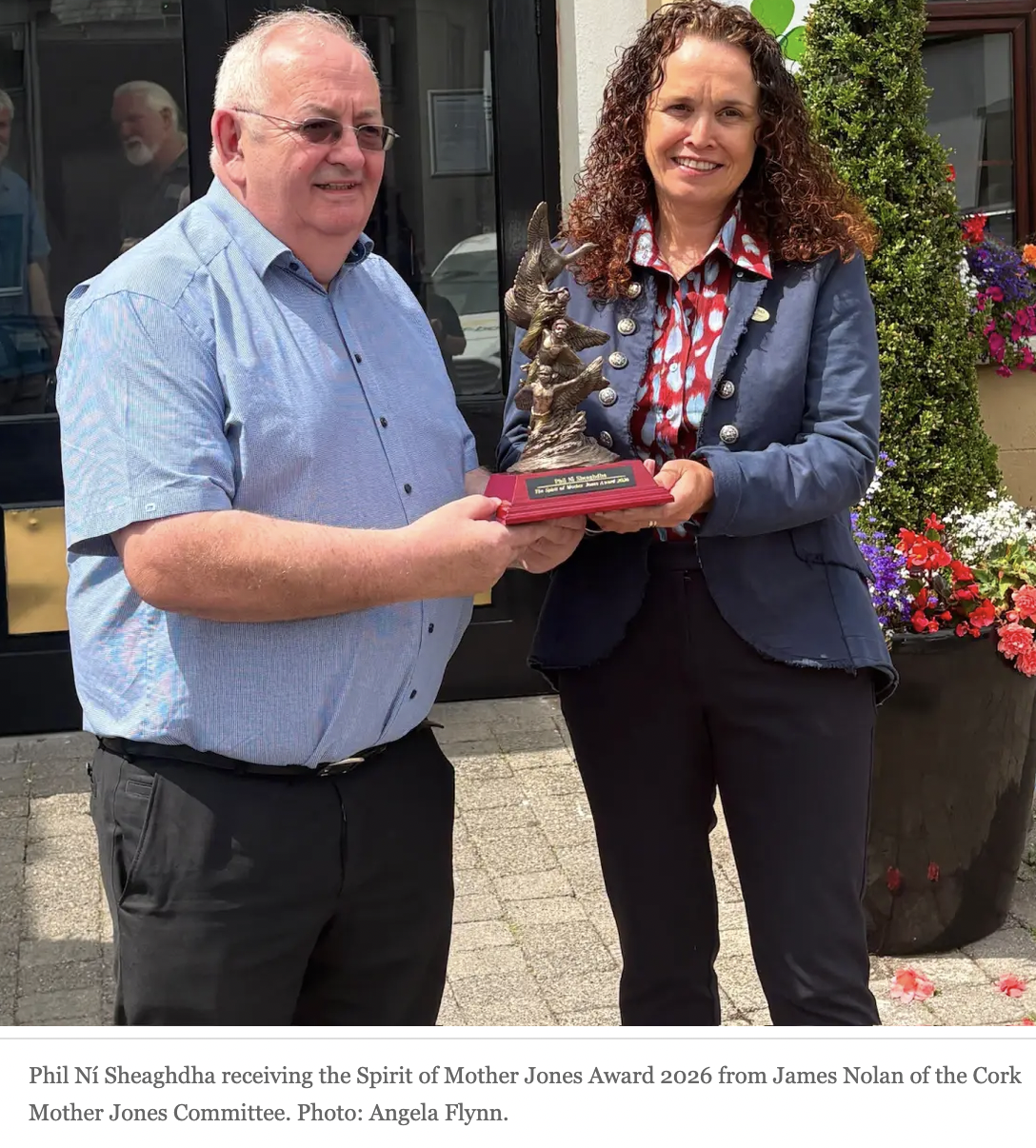
And the Cork folks keep her work going with Mother Jones annual awards to labor sheroes and heroes.
This year the Mother Jones award winner is Phil Ní Sheaghdha, leader of the Irish Nurses and Midwives Organization and president of the Irish Congress of Trade Unions, chosen for her exemplary healthcare work.
She’s honored for leading a national nurses strike for better pay and staffing; protecting front-line nurses during Covid-19; and fighting for healthcare and hospital conditions for all people.
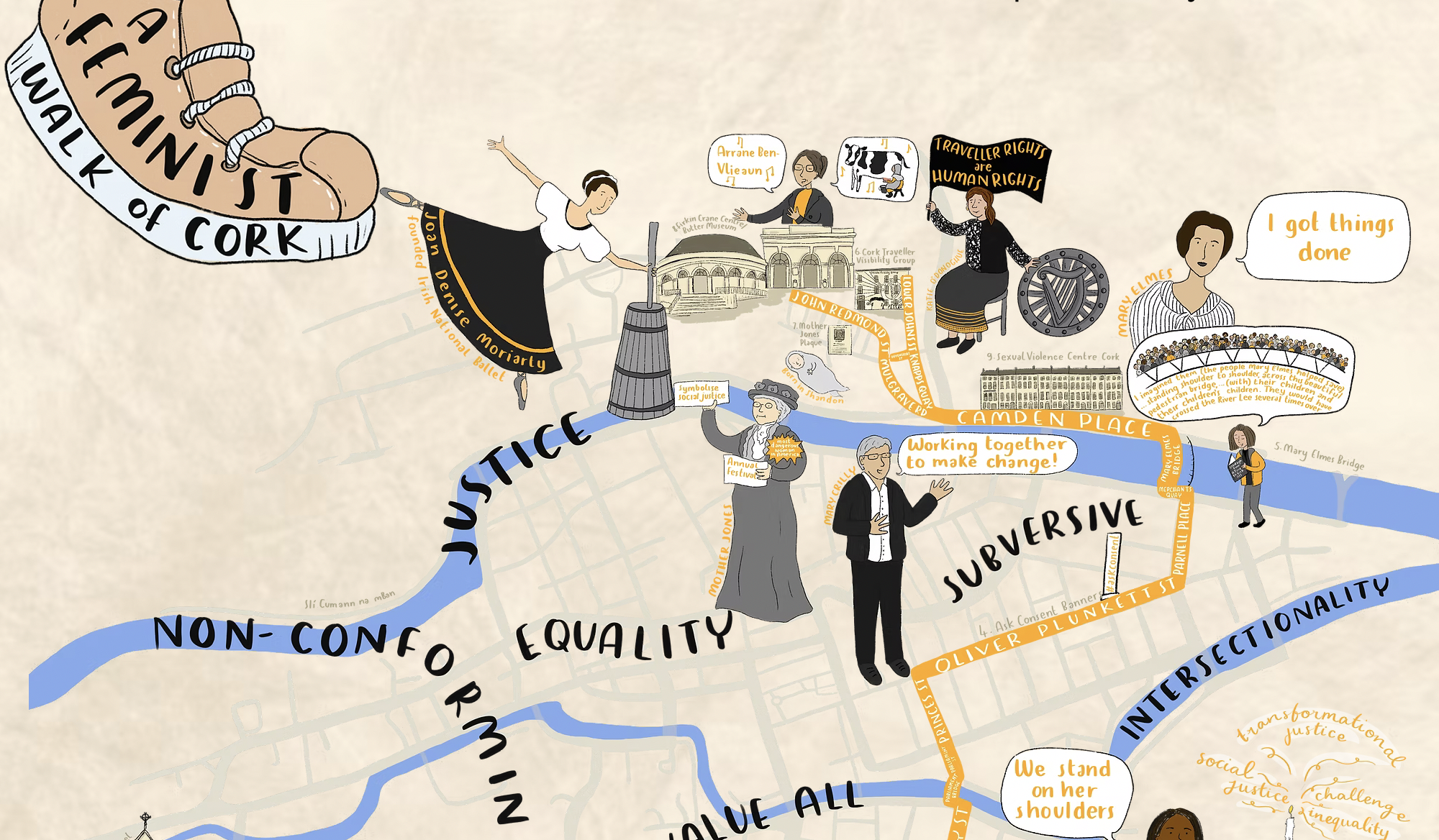
Natch, Mother Jones is central to this Feminist Walk of Cork! And because I’m also addicted to walking where s/heroes did awesome things and inviting others to join me, I appreciate this way the Cork feminists frame walk activism.
MoJo magazine: Fearless for 50 years

And then there’s the exemplary and essential Mother Jones magazine, now celebrating its 50th year! They named themselves after Mother Jones and continue to carry out her mission of fearless independent reporting to right wrongs.
Learn how Mother Jones magazine pushed for needed change over the years, such as getting dangerous cars off the road, revealing the insidious grip of Big Tobacco, and more in this fascinating podcast with Monika Bauerlein, CEO of the Center for Investigative Reporting, which produces Mother Jones, as well as the public radio show Reveal and its sister podcast, More To The Story.
A motto well-lived: “Pray for the Dead and Fight Like Hell for the Living”
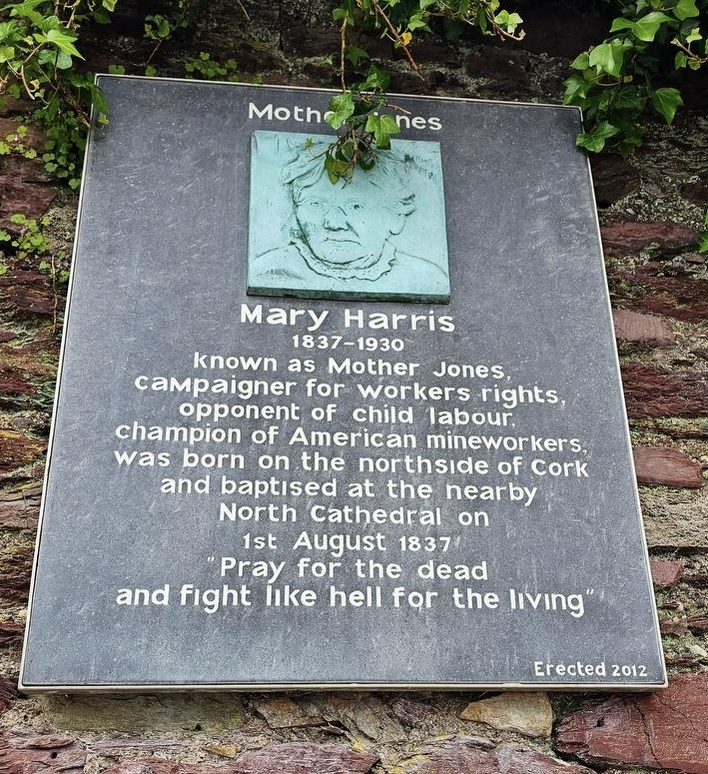
Mary was born near this Cork, Ireland, marker.
Here’s the Mother Jones story from her birth around August 1, 1837 to her death on Nov. 1, 1930. (Her baptismal date is August 1; later in life, she adopted International Worker’s Day as her May 1 birthday.) Mary Harris was born to tenant farmers near Cork, who left behind the potato famine to immigrate to Toronto.
Mary taught school in Toronto and then in Chicago, where she also supported herself with dressmaking. In both professions, she was angered by the disparity between poor and rich children and the fancy women who bought her dresses and the poor women like her who made them while living in distressing conditions.
When she moved to Memphis at age 24, she met and married George Jones, an iron molder. George was a leader in his well-organized union, and the union members kept their pay and working conditions better than most workers. Mary ran the household and tended their four young children.
In 1867, yellow fever took all the children: Catherine, 5; Elizabeth, 4; Terence, 2; and baby Mary. Shortly after, George caught the fever and died. Thousands died in a yellow fever wave that hit many cities, particularly in the South. But it hit the lower class hardest, such as those living in Mary’s neighborhood surrounded by a stagnant bayou that bred mosquitos and germs.
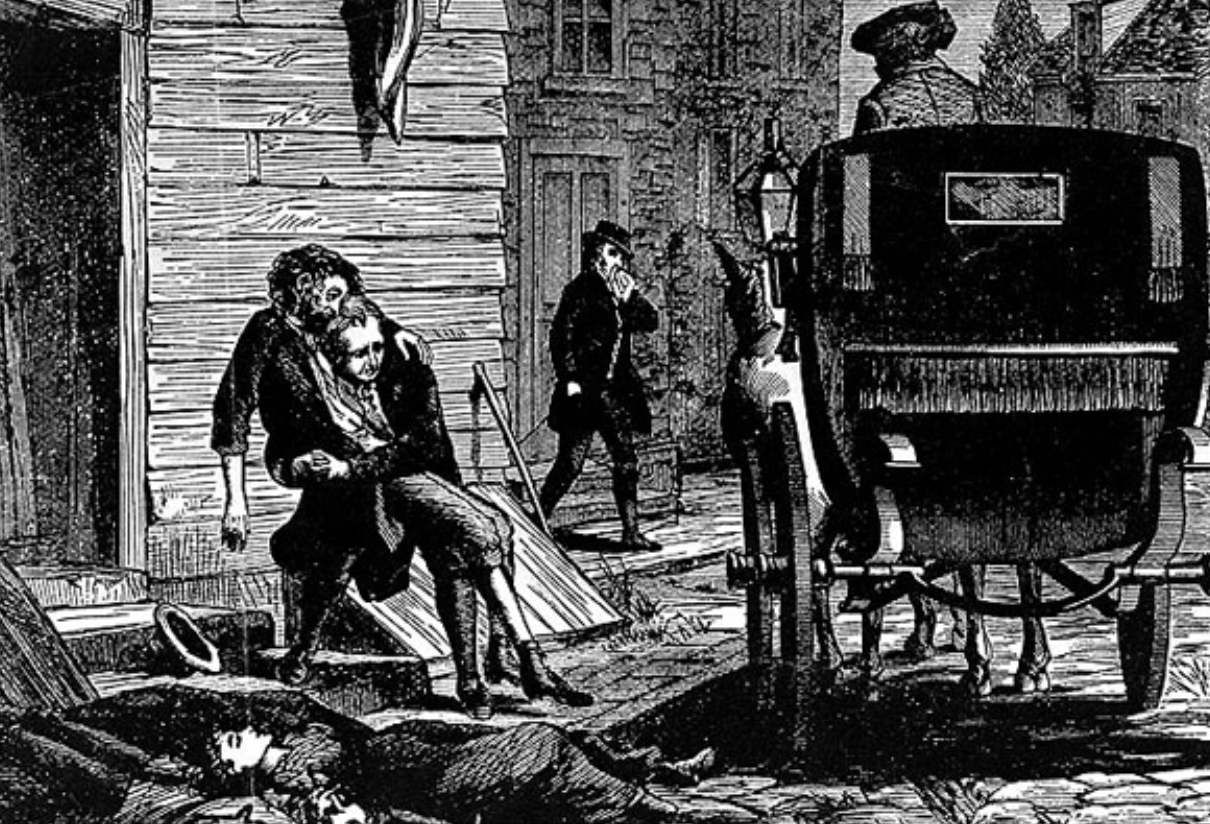
Mary lost all four children and her husband; the death cart took them away.
Mary was left alone, grieving through long nights listening, as she writes in her autobiography, to “the grating of the wheels of the death carts.” She returned to Chicago and dressmaking. Horror struck again after four years: Her house and shop burned to the ground in the 1871 Great Chicago Fire, and she had to start over again.
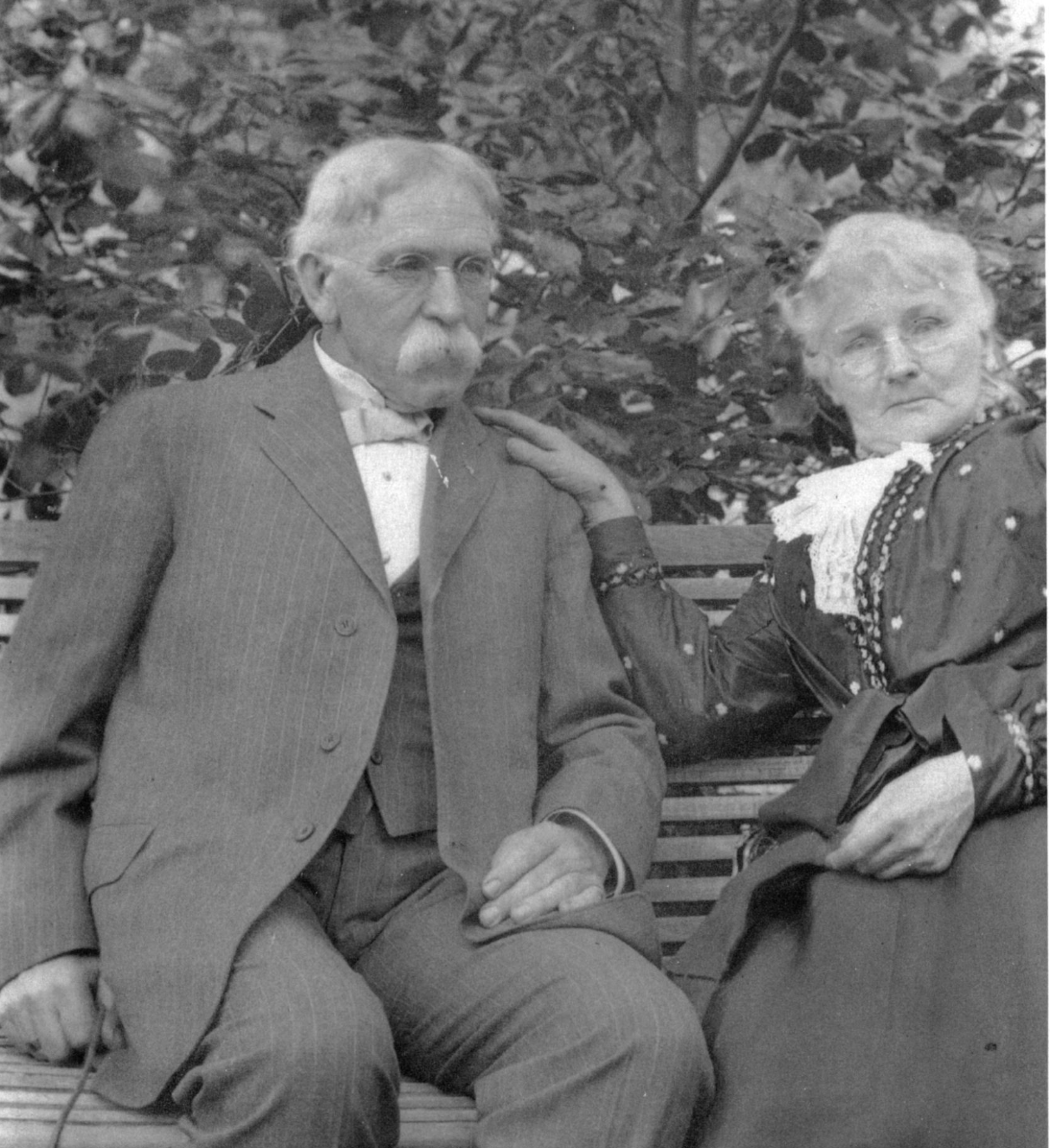
Terence Powderly with an older Mother Jones
She started going to meetings of the Knights of Labor and joining in actions. She befriended Knights of Labor leader Terence Powderly, who with spouse Emma would invite her to share their Washington, DC, home when Mother was old.
Mary upped her labor activism steadily and she became sought out for her organizing skills. Over the years she was a paid and valued organizer for the United Mine Workers and the Socialist Party. They were wowed by her successes, such as growing the UMW from 10,000 to 300,000 members. Her organizing wages let her minimize her dressmaking for support.
Working people loved “Mother Jones,” as she became known, because she personified the best of motherhood: Loving yet firmly encouraging and pushing people through daunting times toward necessary goals. She’d be sweet and protective of “her boys,” but she’d also challenge them sharply to stay the course for family and union.
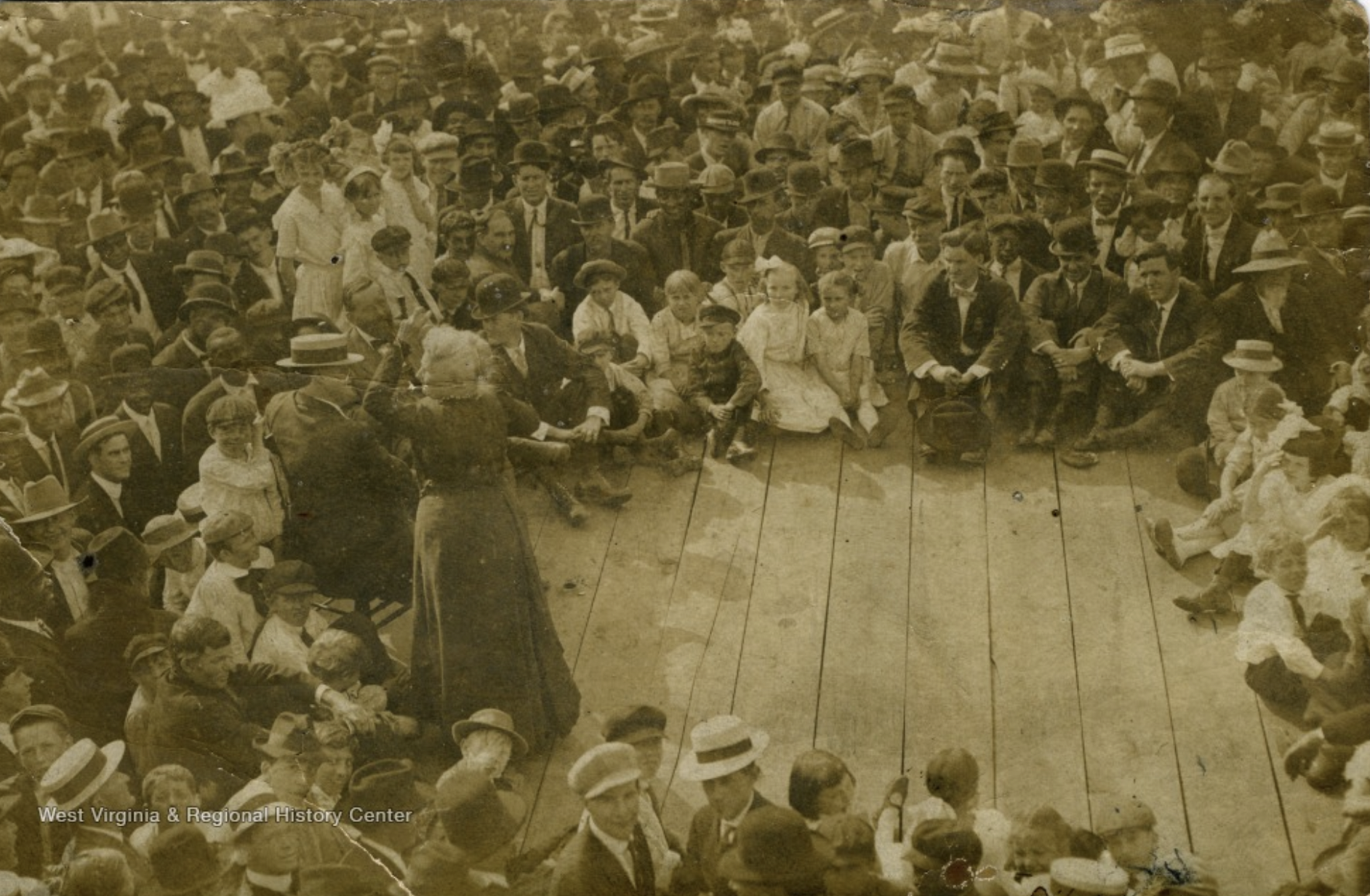
Mother Jones mesmerizes a West Virginia crowd in 1912.
Her speeches were thrilling and stirring, and her humor tart and targeted. She’d skewer John D. Rockefeller as “Oily John” and Governor William Glasscock of West Virginia as “Crystal Peter,” and swear like a sailor when with her boys. She had a never-ending font of engaging stories that resonated deeply with her audience. She had a grab bag of jabs that spread like old school memes. “I asked a man in prison once how he happened to be there and he said he had stolen a pair of shoes,” she’d say. “I said if he had stolen a railroad, he would be a United States Senator.”
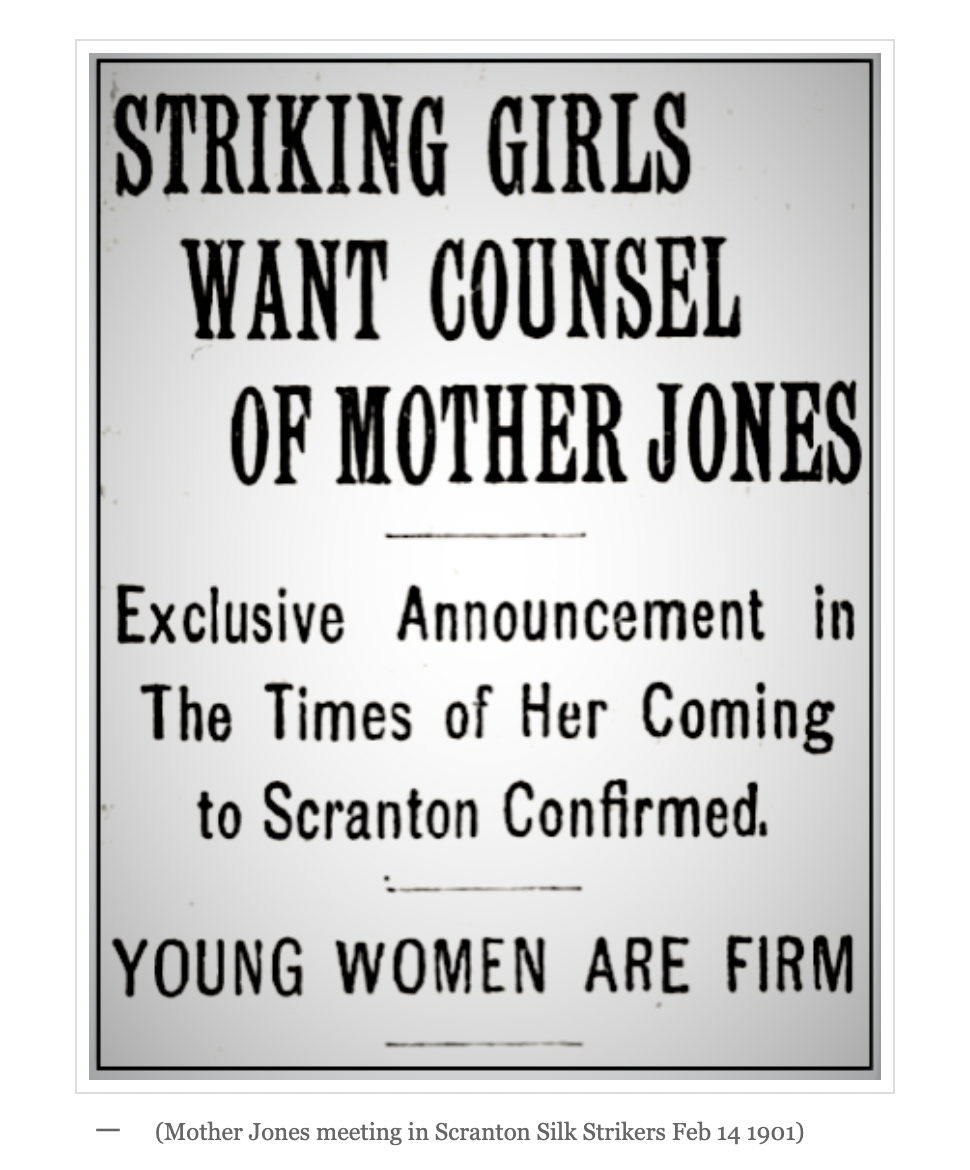
She’d enlist women to support their men in “mop and broom” brigades to harass scabs and bosses. While she’s most identified with organizing men, she’d often help women labor activists, and they looked up to her as a mother and ally.
Her austere granny dresses and kindly, passionate brogue made Mother adored by loyal masses. Over the years, she added on seven years to her real age—either way, who could NOT be impressed by an old lady with rheumatism scrambling up coal mountains and rickety tenement stairs to support and lead workers?
Mother pushed herself with a grueling schedule that took her criss-crossing the country to fight for coal and steel workers, garment and textile workers, streetcar operators and brewery employees, copper miners, and more.
Mother Jones slowed down in her later 80s as rheumatism worsened, but she showed up at age 87 for striking dressmakers in Chicago, where hundreds of women were jailed and black-listed in 1924. She spent her last six years with first the Powderlys in DC and then with friends Lillie May and Walter Burgess in Adelphi, Maryland.
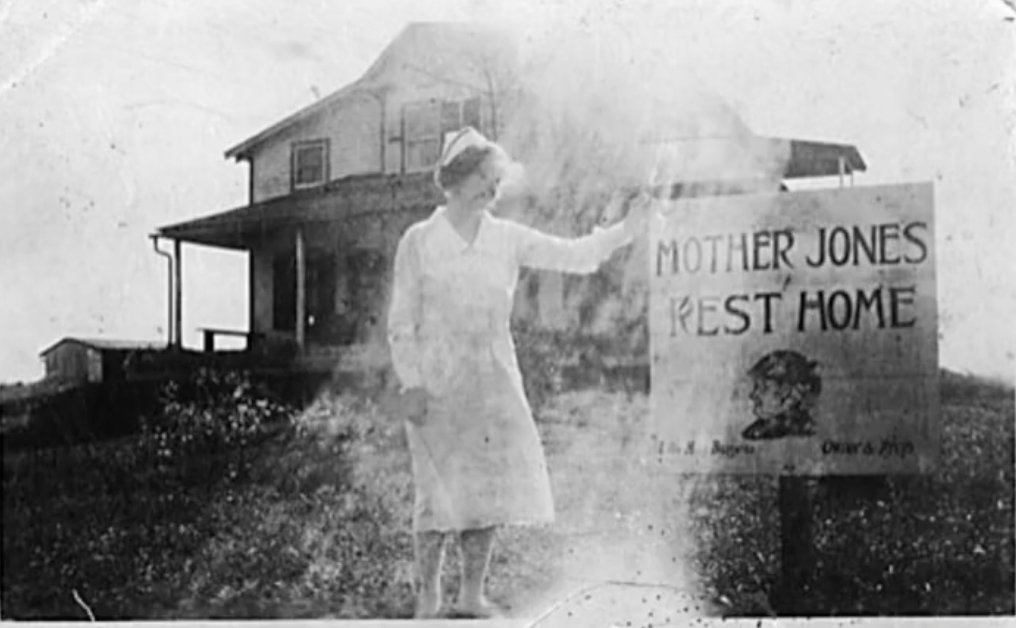
Photo courtesy of Saul Schniderman
The Mother Jones historical marker is a stone’s throw from the Burgess farm. After Lillie May nursed Mother until her death, she ran the “Mother Jones Rest Home” there until 1954. The Hillandale Baptist Church bought the property in 1956; their parking lot marks the farmhouse site. Church leaders are proud of their link to Mother Jones.
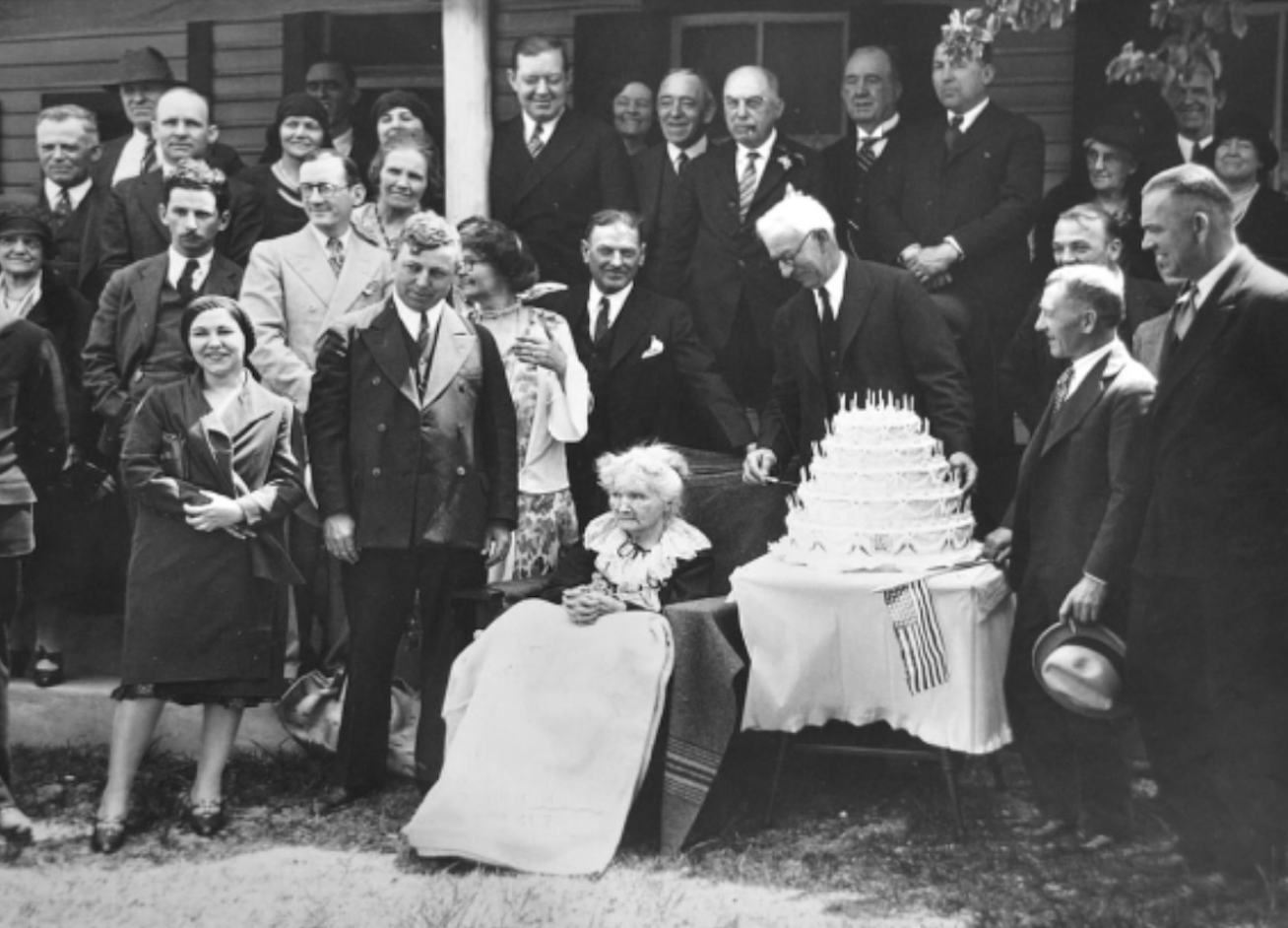
Friends and labor leaders at Mother’s 100th birthday (actually 93 but who’s counting!)
Lillie May organized a fabulous 100th birthday party there, attended by friends from around the country. Six months later on Nov. 30, 1930, Mother Jones died at the Burgess home. Her funeral high requiem mass at St. Gabriel’s Catholic Church in DC was SRO.
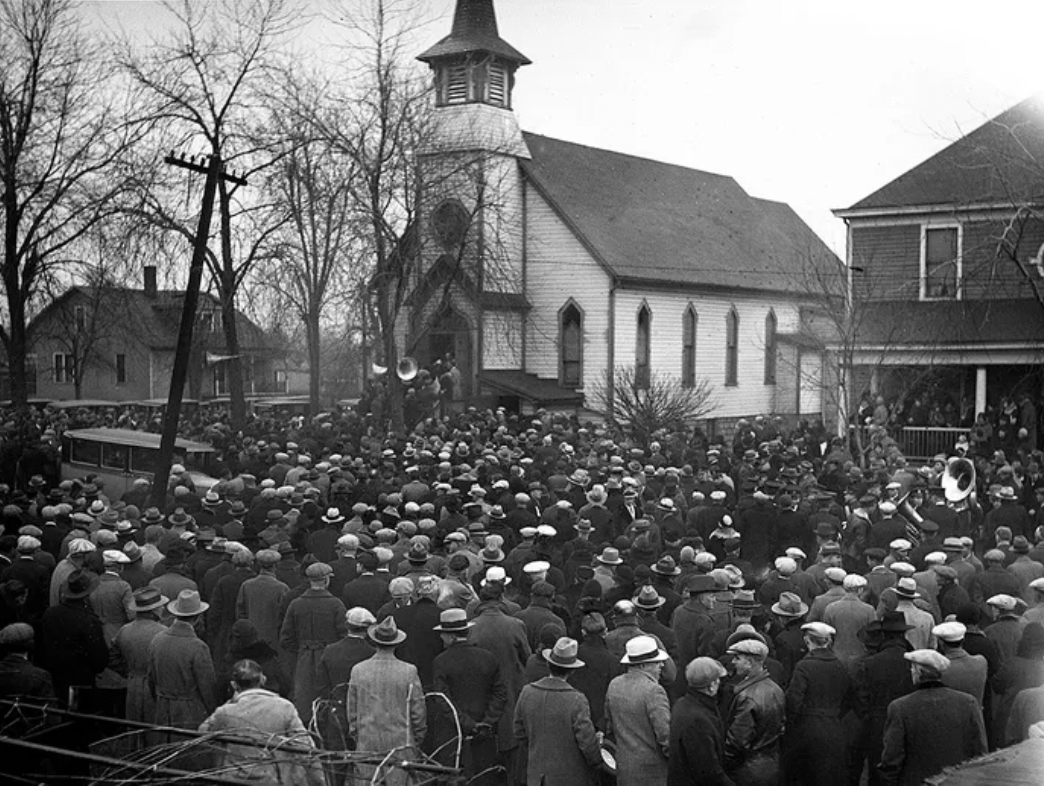
Her body was sent by rail as she had instructed to be buried “with her boys” in the Union Miners Cemetery in Mount Olive, Illinois. Mt. Olive was the site of a successful coal strike and battle that killed seven miners and made the UMW America’s most powerful union. Thousands came to the burial, and the UMW built a beautiful monument to honor her. Learn about the monument and come take a walking tour there (or virtually) with the Mother Jones Museum.
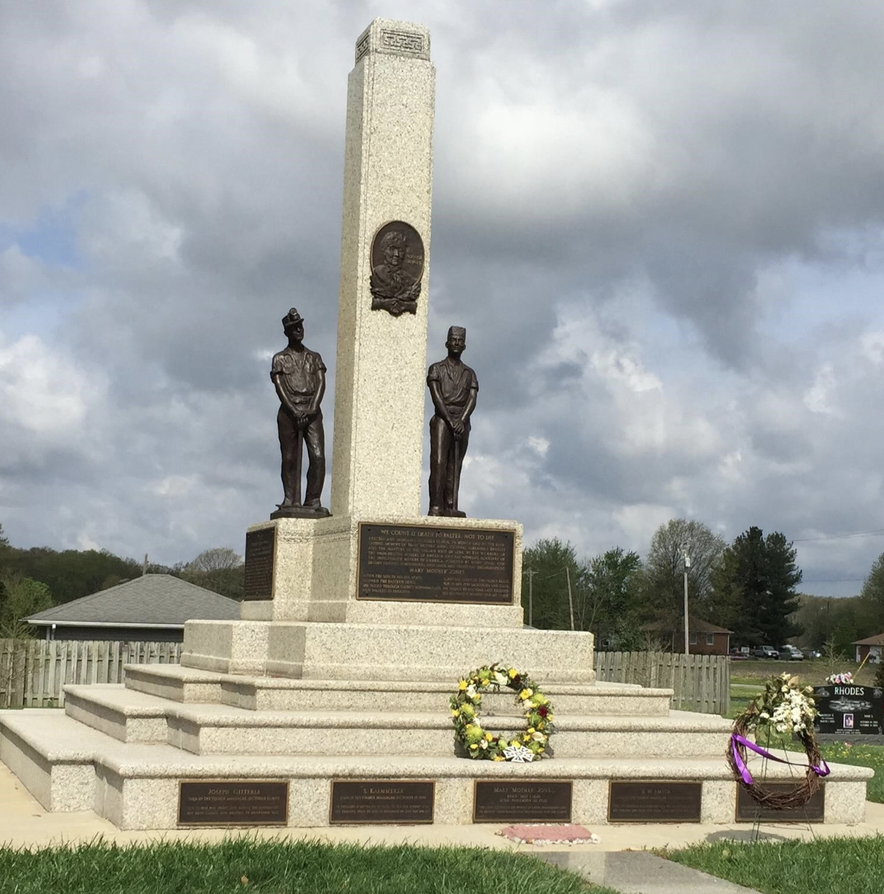
Grateful fans gather here to honor Mother Jones.
Now, back to the journey tracing some stops of Mother’s Mill Worker Children’s March.
Philadelphia: The Children’s Crusade begins
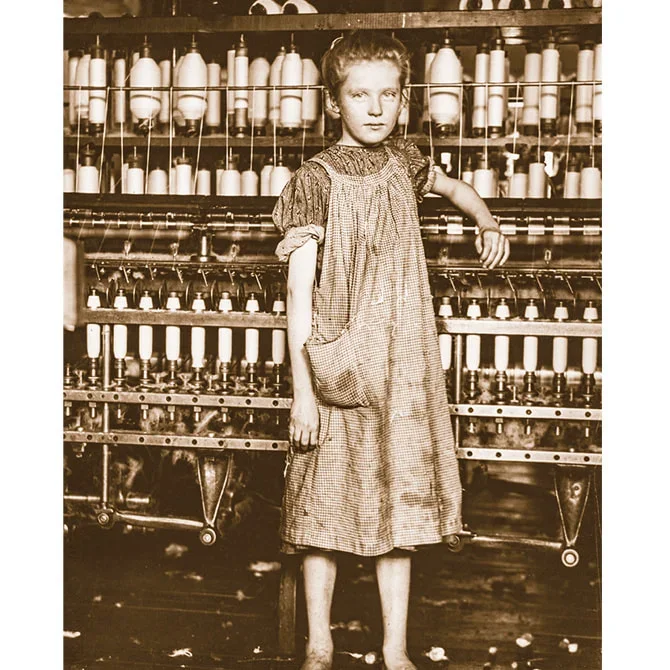
Addie Card was eight years old when she started at a Vermont cotton mill.
Mother Jones was well aware of the evils of child labor when she came to Philadelphia in 1903. She came to support and organize for the massive textile strike. Some 16,000 child workers labored in mills there, and they were joining some 100,000 textile workers from 600 area mills who were going out on strike. They were calling for a reduction from 60 to 55 hours of toil a week, even if it meant lower pay.
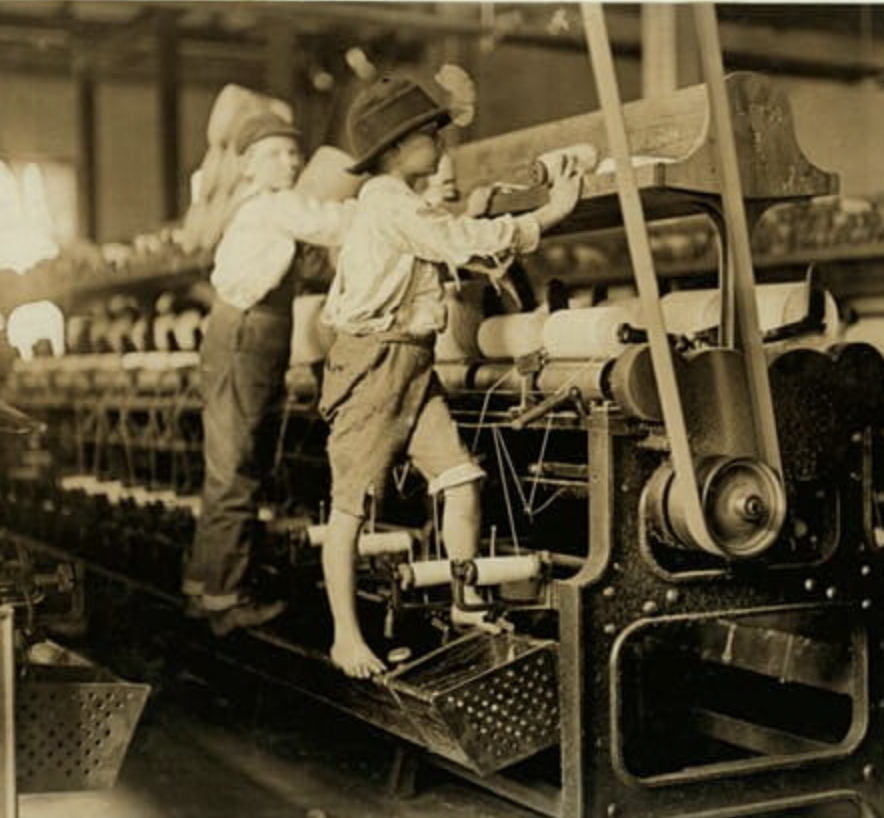
Boys too small to reach spools climb on dangerous equipment in Macon, Georgia.
She’d talked with so many families, desperate for money and forced to send out their children to work under awful conditions. Mother Jones had gone undercover to work textile jobs. She worked with children who’d risen at 4 am to work a 14-hour shift, beset by injury and illness as they worked with dangerous equipment. Textile dust rattled their lungs and their lunches were meager slices of cornbread soaked in cottonseed oil and coffee. They might make 10 cents a day.
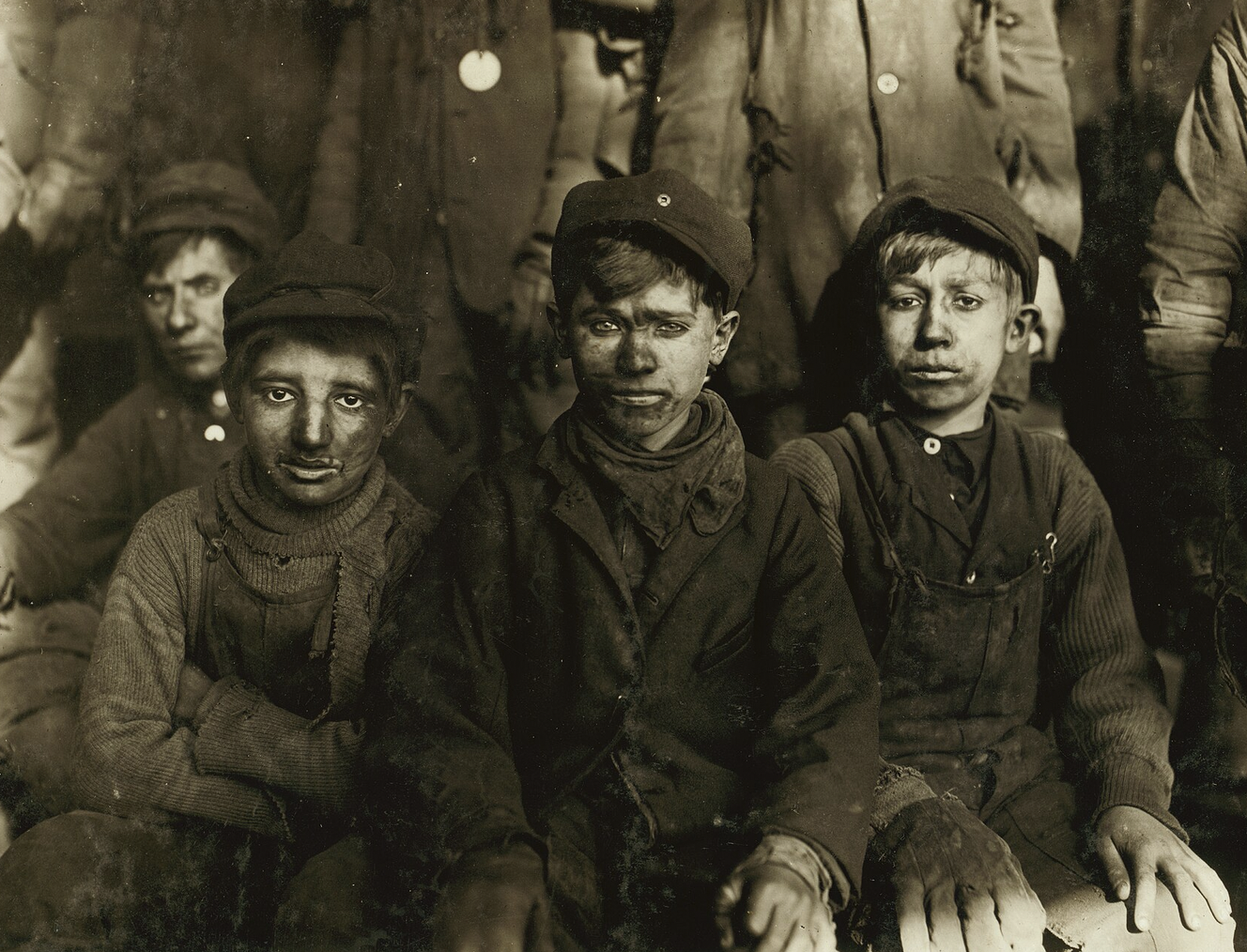
Boys at a Pittston, Pennsylvania mine
Mother Jones had seen many other ravages of child labor, such as coal mining boys maimed or crushed to death by massive machinery, hands raw and bleeding from sorting coal chunks; backs bent from narrow mine passages; coughing from ever-present coal dust.
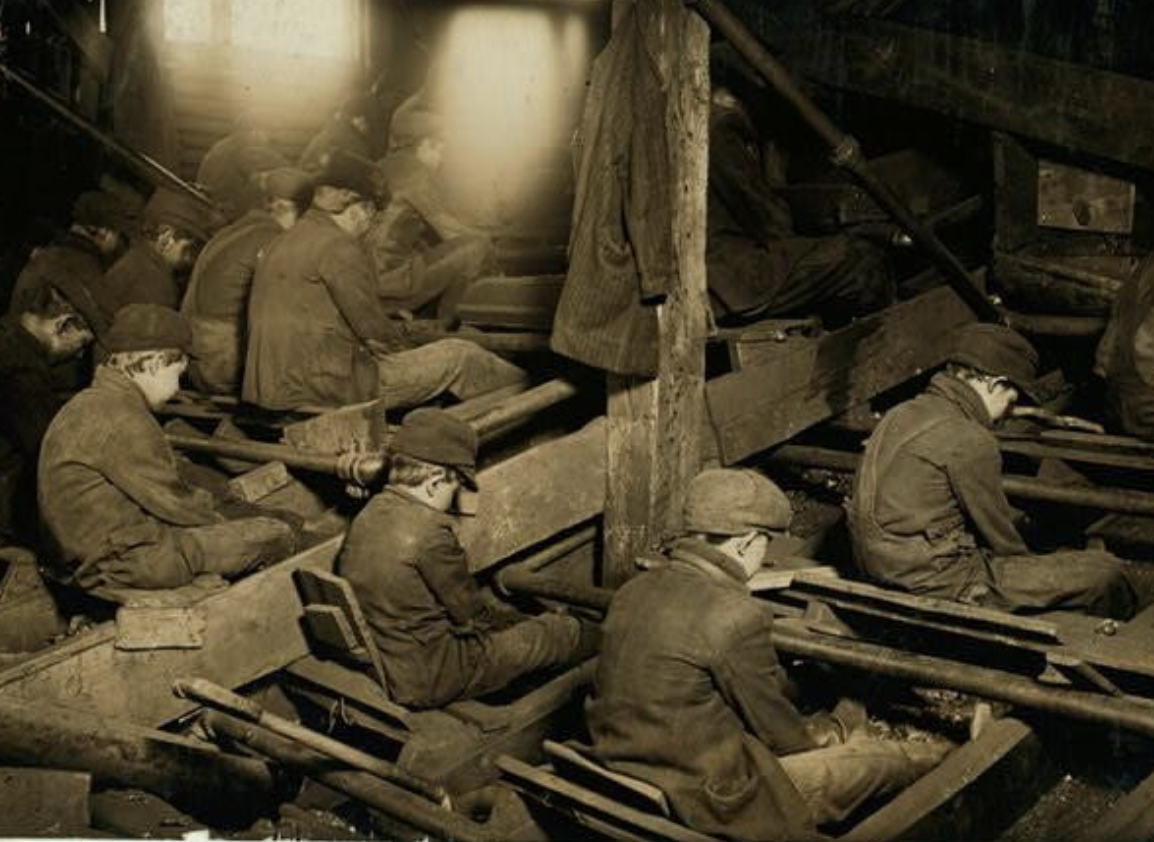
Endless sorting coal at the South Pittston mine
Pennsylvania was one of the worst states for child labor, with the most children employed in dangerous jobs. As Mother Jones looked for new ways to bring attention to this abomination, she conceived of the children’s walk as a way to educate and ignite outrage among those unaware of the conditions of child workers. And she hoped it would shame the bosses of industry.
She recruited children and supervising adults, including children injured by their work. She styled it as a venture as patriotic as the Revolutionary War and as evocative as the nearby Liberty Bell. She outfitted the kids in colonial army uniforms, and the children marched and sang with a drum and fife corp. They carried a huge American flag.
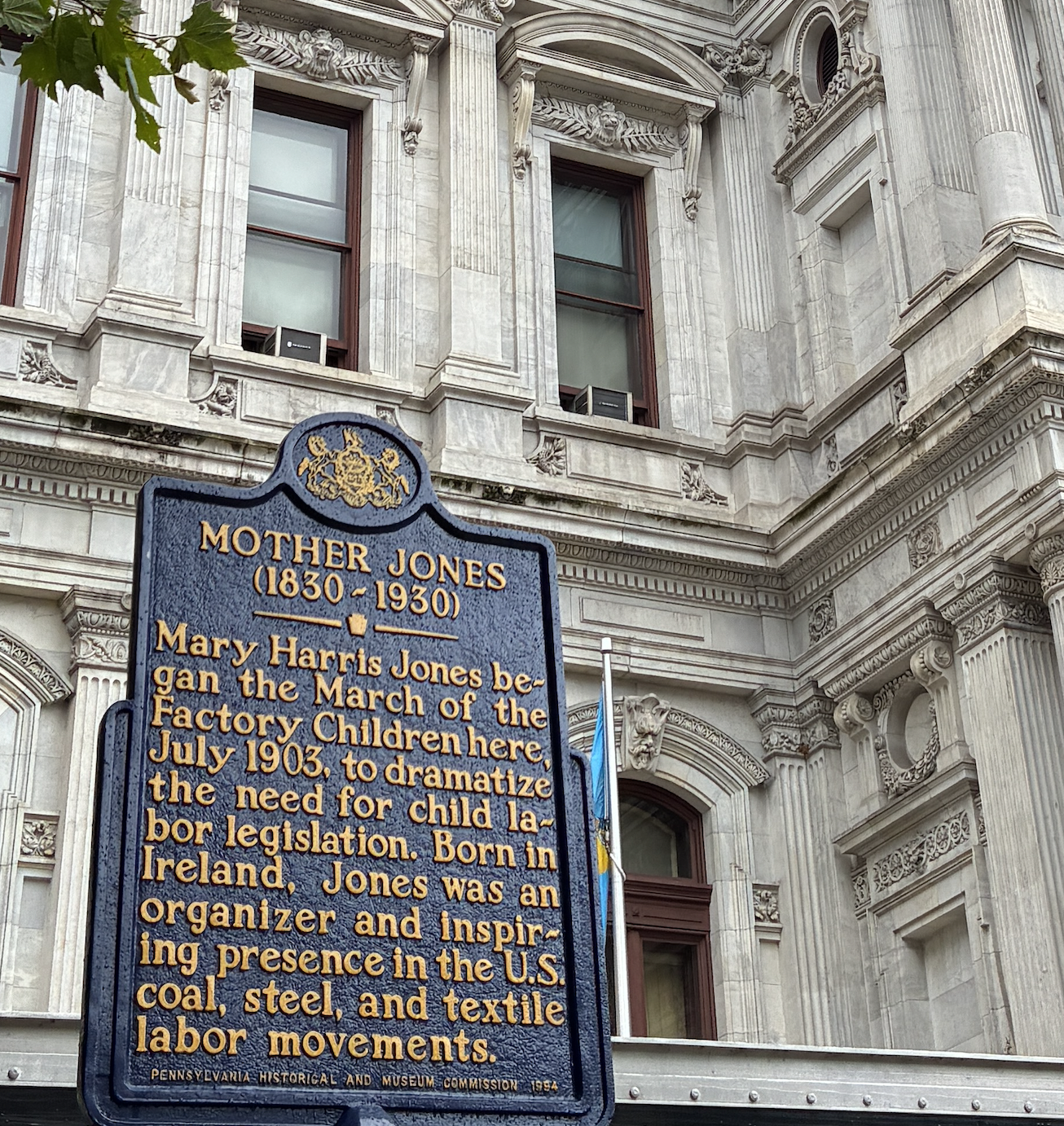
Mother Jones where she brought the children to Philadelphia City Hall
Mother’s Army marched from the Labor Lyceum to Philadelphia’s majestic City Hall, built just a few years before and just as magnificent today. Mother had first thought the marchers would go about 30 miles, stopping for speeches and gathering collection at towns. But then she reconsidered.
As she writes: “I decided to go with the children to see President Roosevelt to ask him to have Congress pass a law prohibiting the exploitation of childhood. I thought that President Roosevelt might see these mill children and compare them with his own little ones who were spending the summer on the seashore at Oyster Bay. I thought too, out of politeness, we might call on [J.P.] Morgan in Wall Street who owned the mines where many of these children’s fathers worked.”
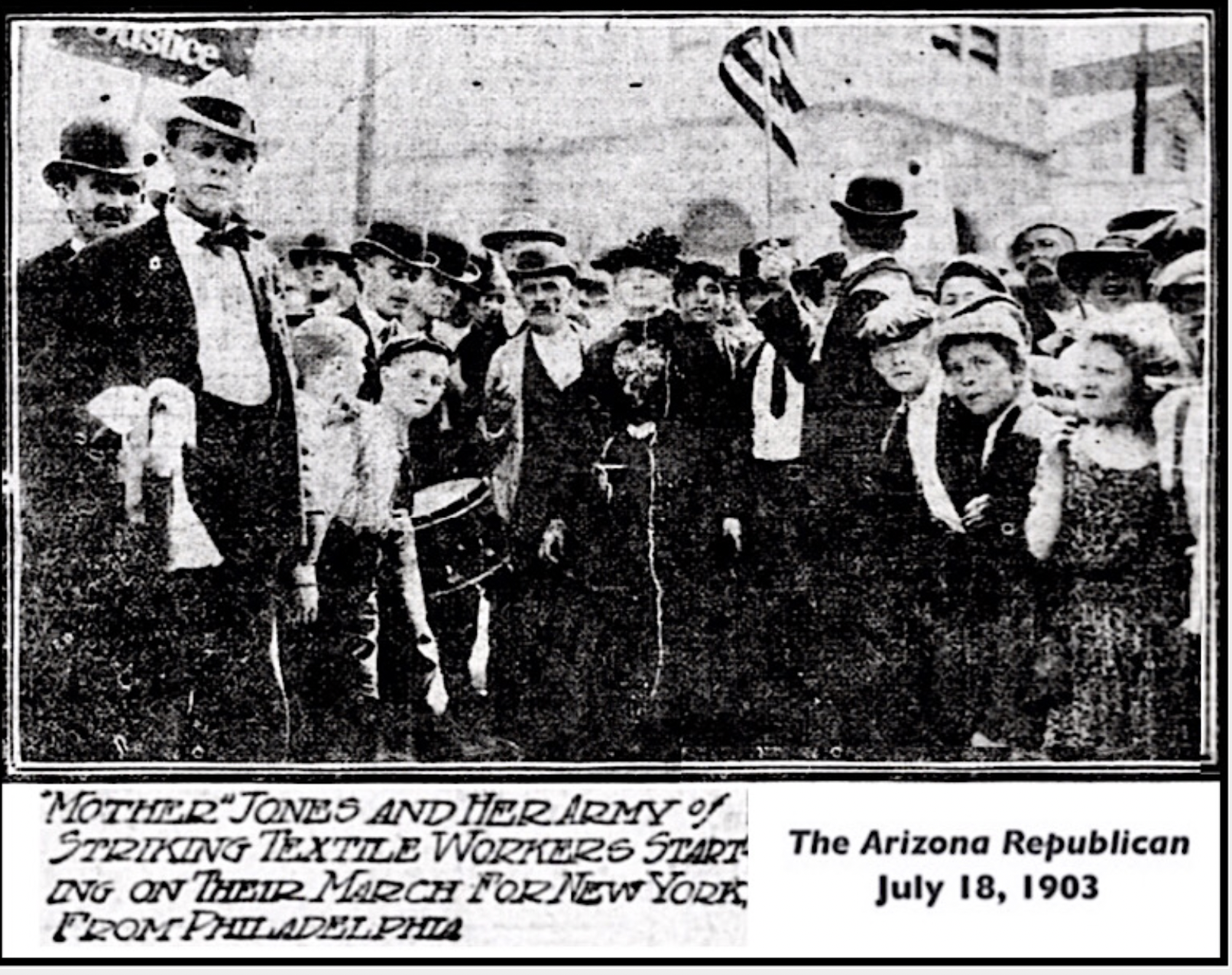
One of the many newspapers following the Crusade march
With speeches and song, some 100 girls and boys, along with textile workers and labor leaders, began their sojourn on July 7, 1903. The plan was to stop for speeches and songs and skits by the children, who’d dress up like “Mr. Capital” and “Mrs. Millowner” to show how business owners exploited their child workers. They’d ask for donations, and cook and eat food donated by grocers and citizens. Often, the fare would be vegetables and potatoes cooked in a big pot. They’d camp where they could, bathing in local streams or the Delaware River.
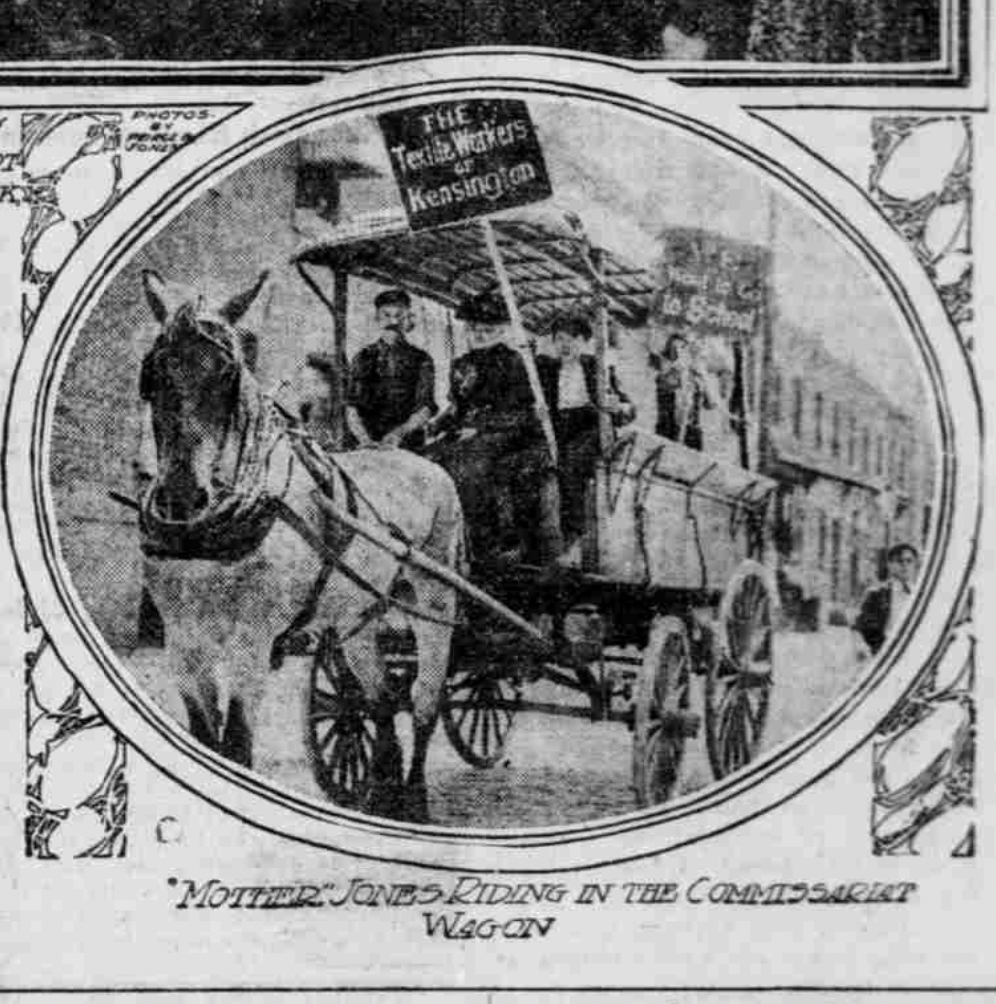
At times, Mother Jones and the children would ride in a wagon instead of walking. This would ensure their good care and answer newspapers who charged that this long march would be too much for children in the summer heat. Mother responded that the critics didn’t seem to mind if children worked 60 hours a week in sweltering mills.
Mother also reports that sympathetic trainmen would stop and give her and the children a lift.
Princeton: Pointed Words
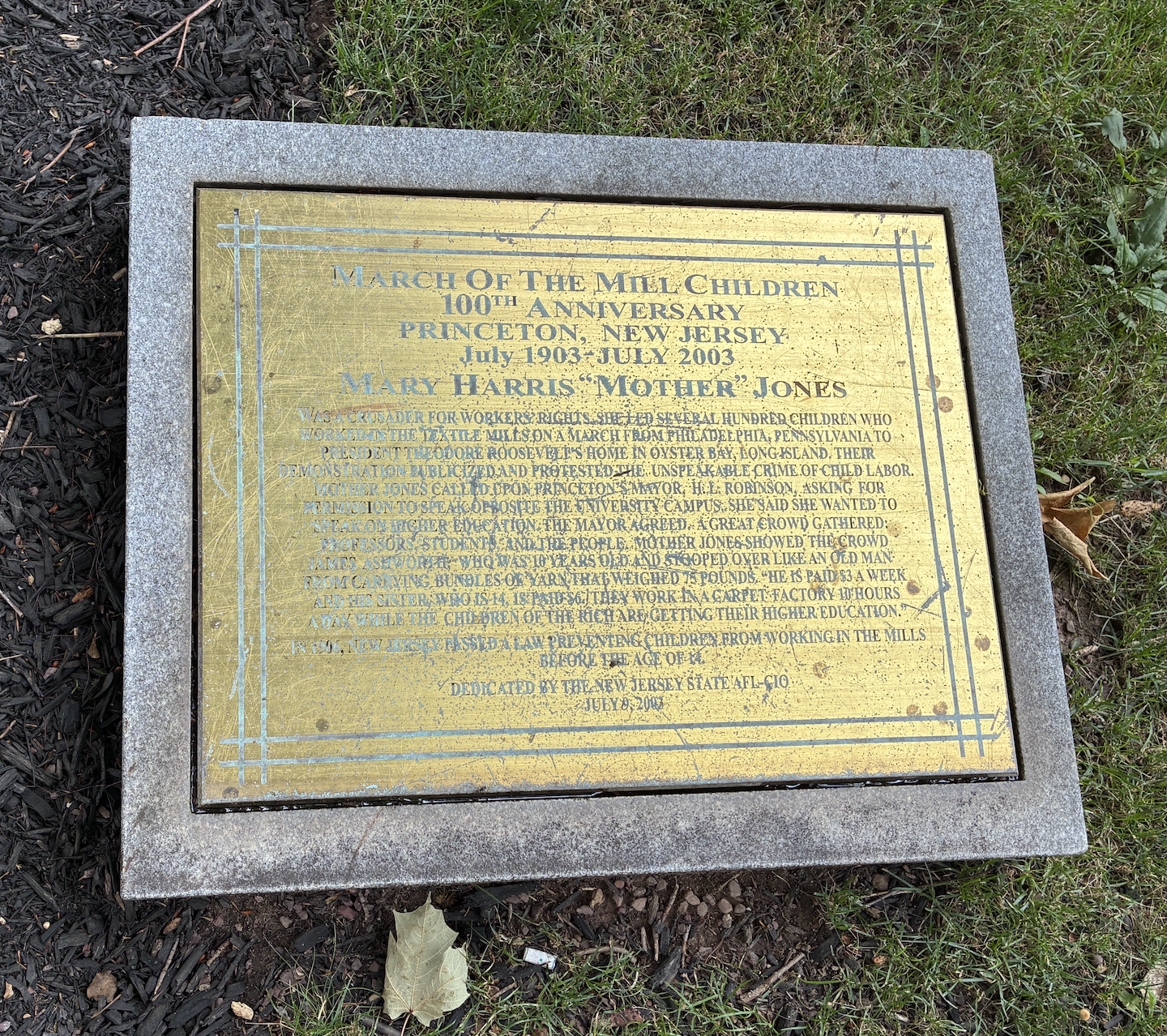
When Mother’s Army arrived at Princeton University, she wasted no time making her point to the professors and students. Here’s what she says of her speech that day in her autobiography:
“I showed those professors children in our army who could scarcely read or write because they were working ten hours a day in the silk mills of Pennsylvania. ‘Here’s a text book on economics,’ I said pointing to a little chap, James Ashworth, who was ten years old and who was stooped over like an old man from carrying bundles of yarn that weighed seventy-five pounds. ‘He gets three dollars a week and his sister who is fourteen gets six dollars. They work in a carpet factory ten hours a day while the children of the rich are getting their higher education.’”
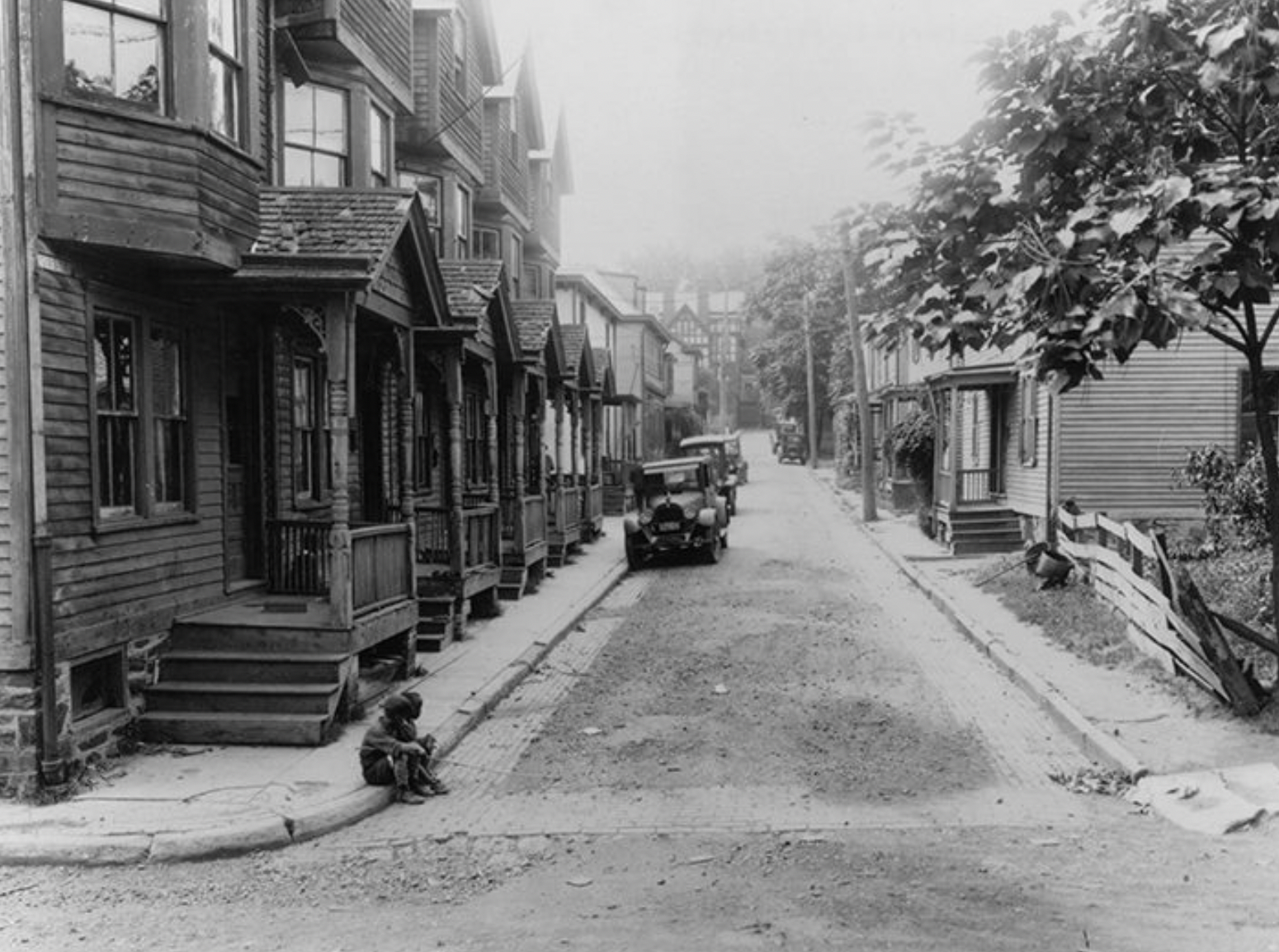
Baker’s Alley was a thriving Black neighborhood and close by labor source for Princeton.
If Mother Jones could stand with you now on the site of her marker, you’d likely hear her roar some of her trademark profanity. Palmer Square is now larded with upscale stores such as Hermès and Ralph Lauren. And this toney square site was once Baker’s Alley, the thriving Black neighborhood pictured above.
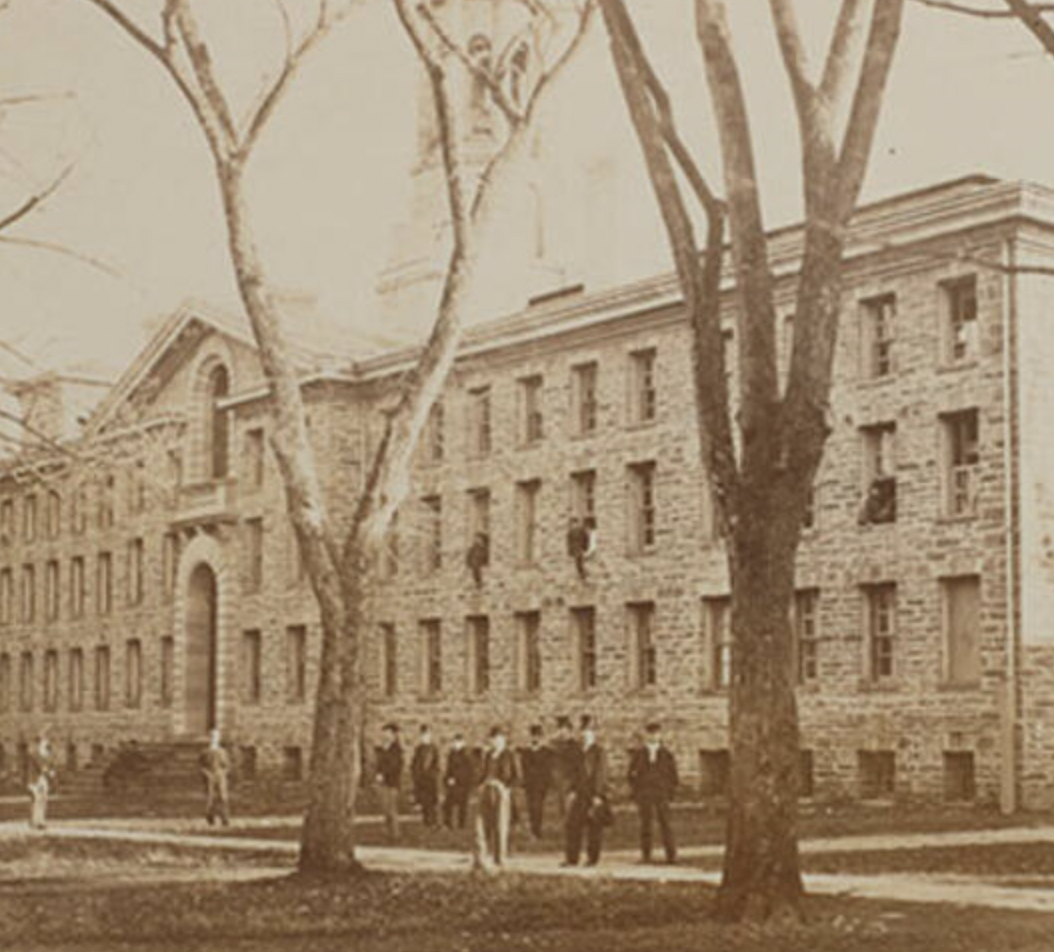
Princeton gents in front of Nassau Hall, built in 1756
The Princeton lads (shown here in front of the oldest Princeton building, “Old North”) and the university relied heavily on the residents to provide services. Square namesake Edgar Palmer, scion to a zinc fortune and major Princeton contributor, cleared Baker’s Alley to build a commercial area that would wow visitors and better accommodate White Princeton and students.
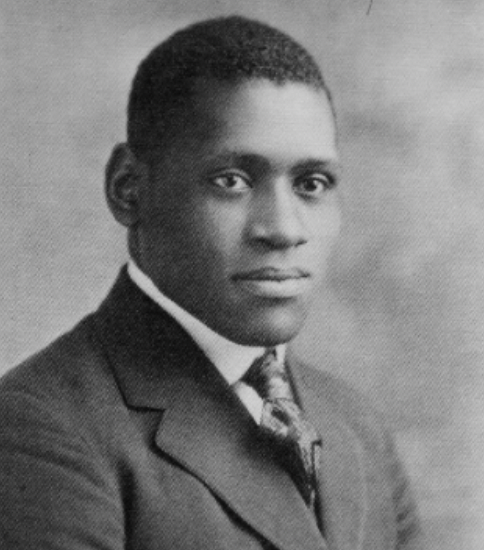
Paul Robeson lived very near Princeton.
Palmer relocated Baker’s Alley homes a few blocks further north, to what’s called the Witherspoon-Jackson neighborhood. Learn about a neighborhood heritage walk past sites of churches, a YWCA, a Green Book inn for Black travelers, thriving stores, a segregated school, and more. With the relocation, residents had to walk further to their jobs, but they were still conveniently situate for Princeton needs.
And these days, neighbors are being priced out, even on streets renamed Paul Robeson Place for Robeson, who grew up on Baker’s Alley. The home of the activist and actor is now a museum; check out the info on Robeson’s life and experiences in Princeton.
I did not make it by the lovely and commodious former home of President Grover Cleveland, located a few miles from Princeton. I was delighted that Mother’s Army got to stay there the night before their Princeton stop (well, OK, in the barn) for a refuge from the wind and rain. I got a tiny glimpse of the Army’s vulnerability to the elements with a downpour during my visit.
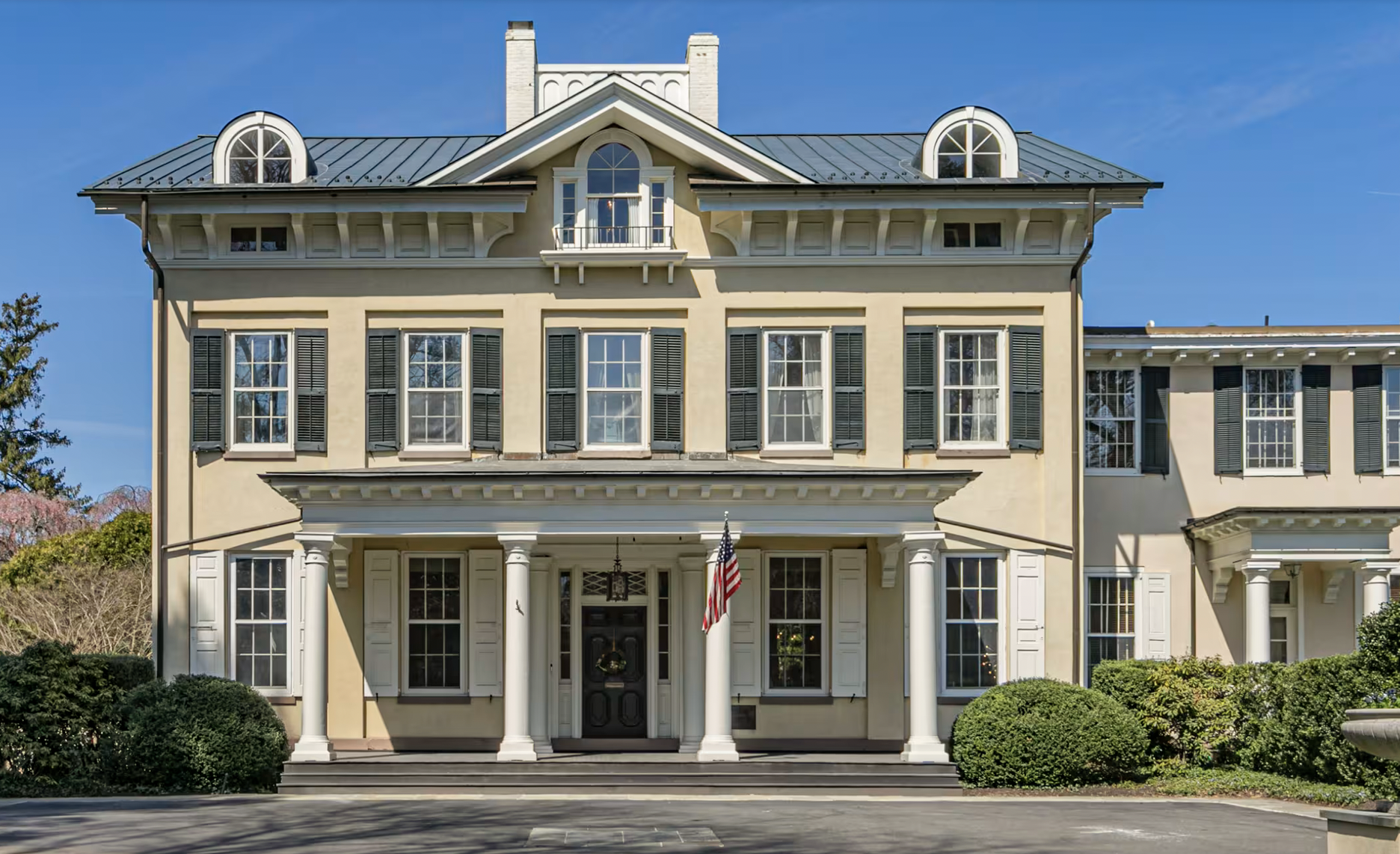
Mother’s Army got to stay in the barn of Grover Cleveland’s Princeton house, and eat fine food.
As the New York Times reported in their sustained coverage of the Children’s March, Mother sought refuge from the weather by knocking on Grover Cleveland’s door. The Clevelands were out of town. But the caretaker came out and said that “the boys and girls” could bunk in the barn.
Mother Jones was also hunted down by the proprietor of the Nassau Inn, the best hotel in town. He wanted to give all the Army members fine food for the night!
Rousing Rahwah
The children and adults were thrilled when innkeeper H.C. Wilson provided a large room for sleeping. Marchers got baths and men got free shaves. The Merchant and Drovers Inn, now a museum, has survived since 1795. Women supporters mended marcher clothes. Mother Jones, ever the mother, helped the children groom, using her own haircombs to comb their hair.
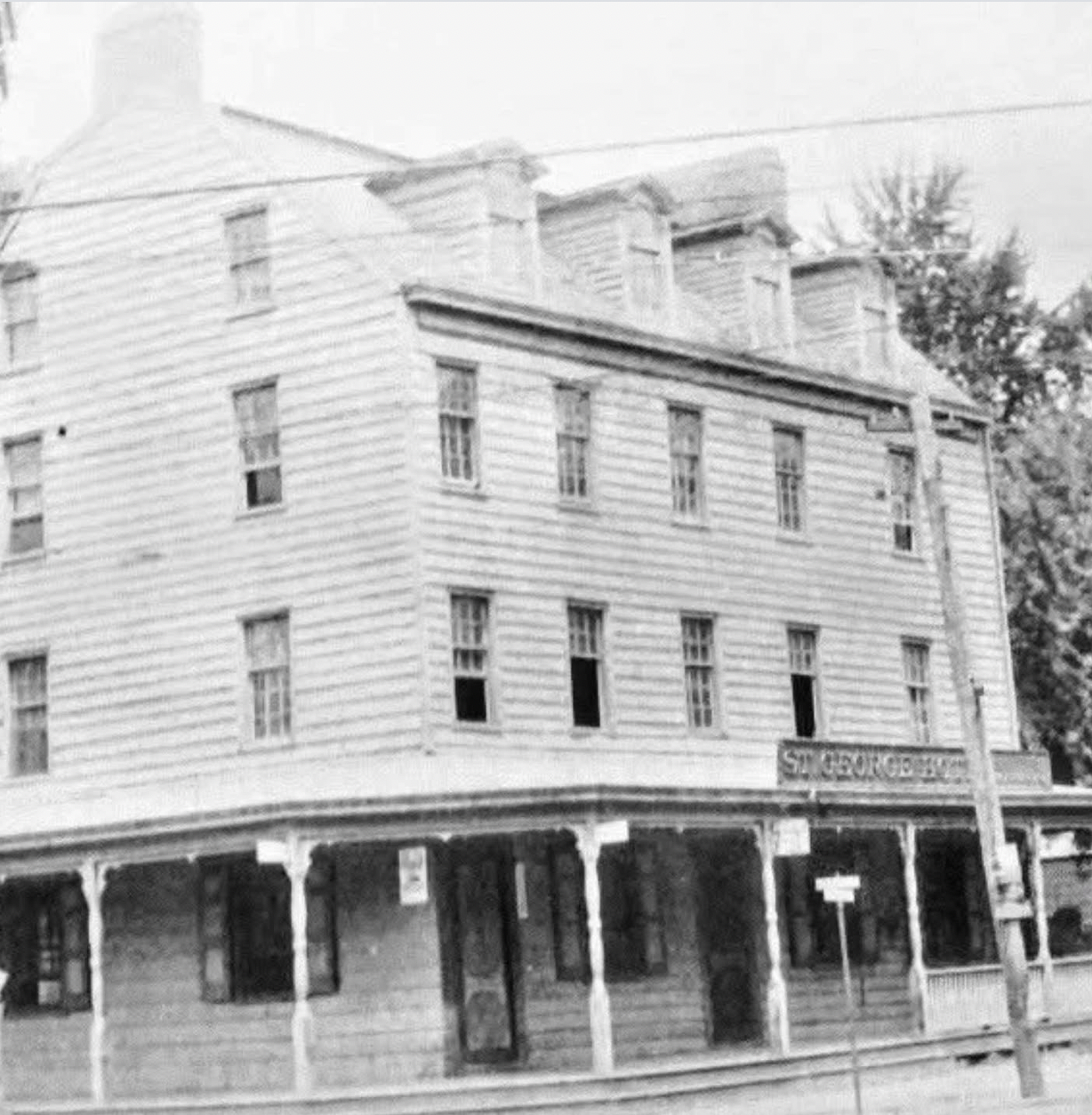
This hotel took in Mother’s Army; it’s now the Merchants and Drovers Tavern Museum.
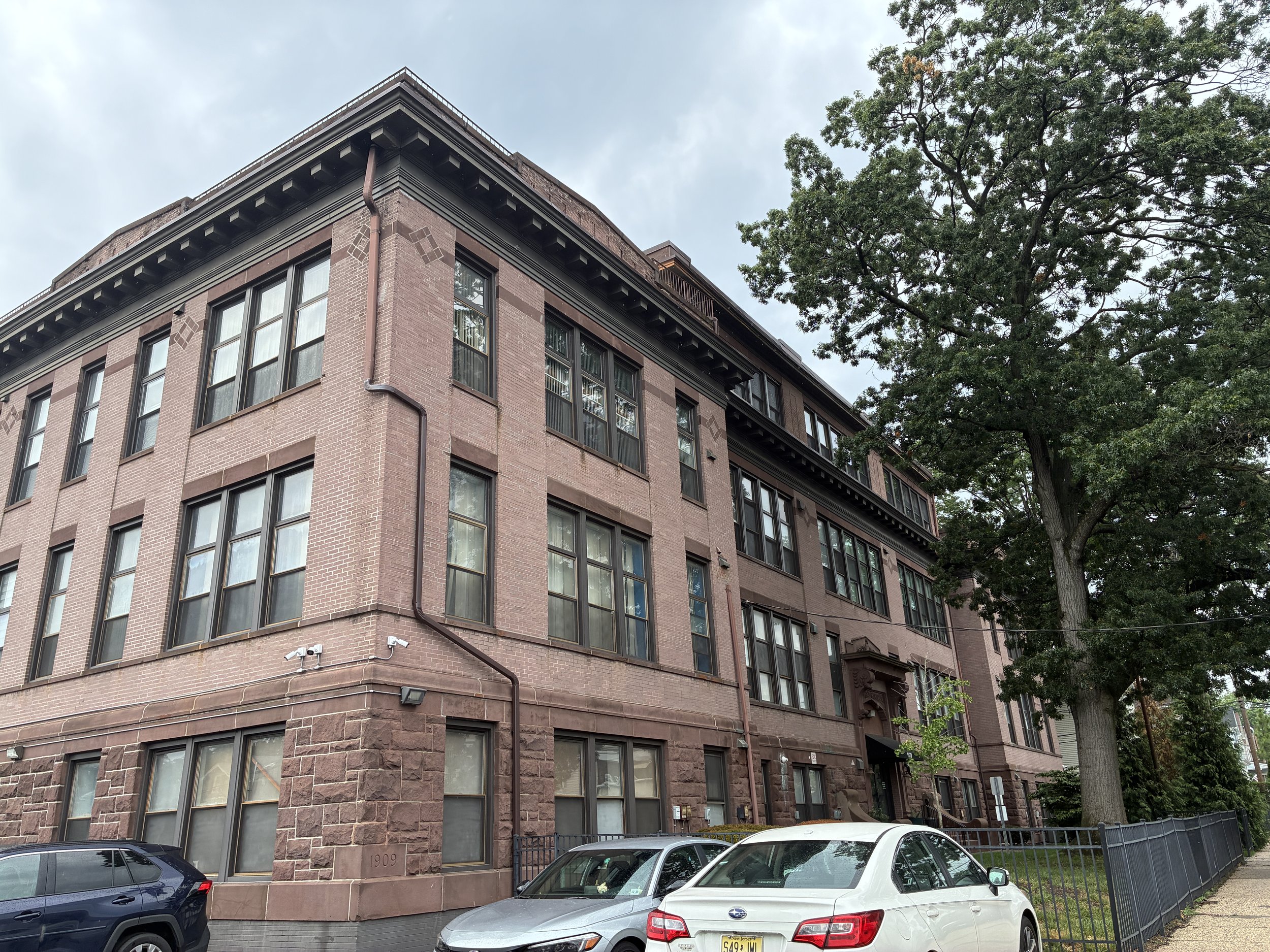
Rahway’s old school
When you arrive at the now nondescript Rahway intersection of Elm and Campbell, picture this: Mother Jones and her army drew 2,000 people to gather here (from a town of around 8,000 then) to educate them on the horrors of child labor.
This beautiful former schoolhouse is just a stone’s throw from the site of Mother Jones’ speech. It was built just a few years after she spoke to accommodate the growing numbers of children needing education.
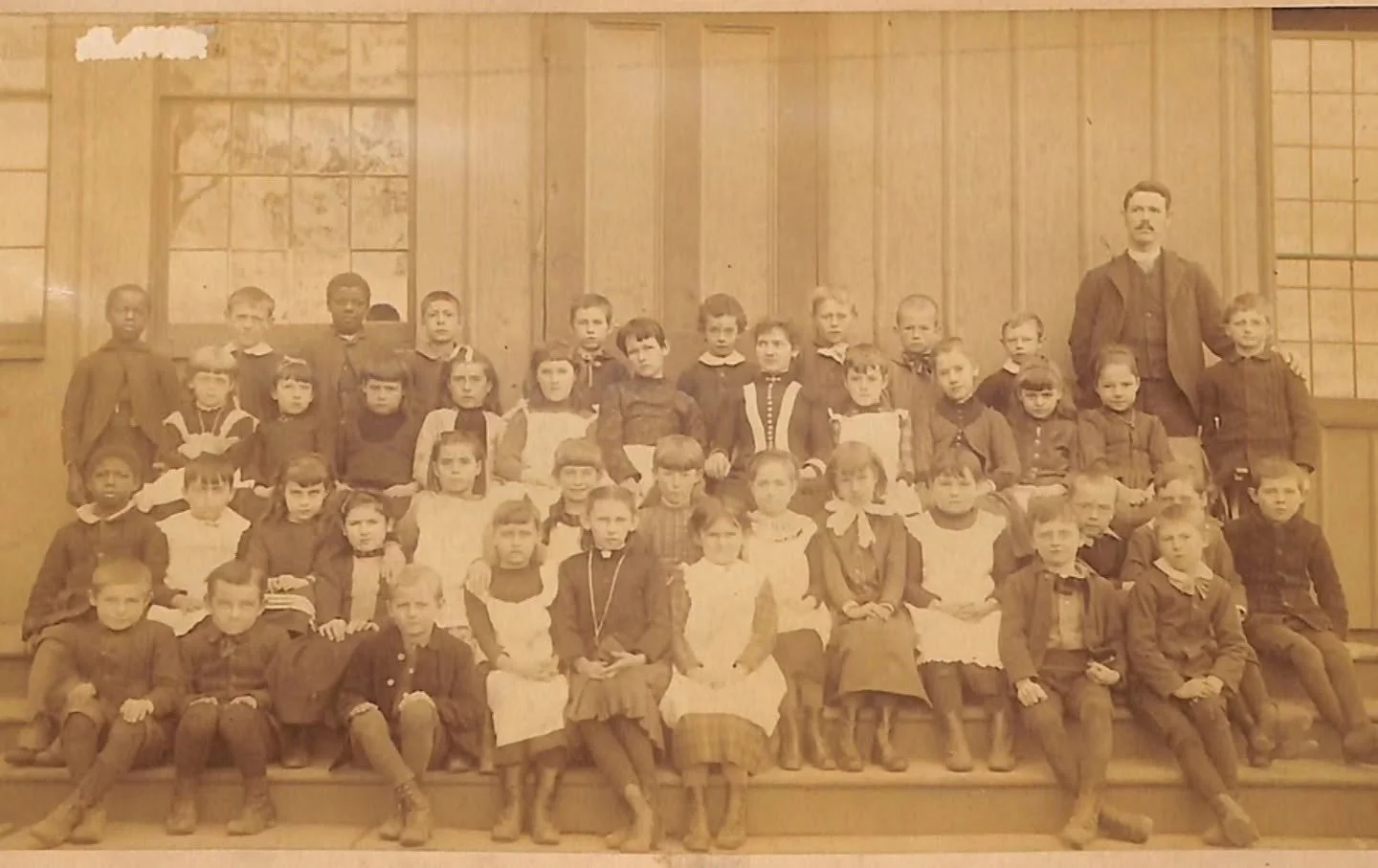
Rahway’s 1904 class
Here are the Rahway school’s class of 1904 who were able to escape child labor for the schoolroom. The mill children would have loved to attend this beautiful school. As their signs said, “WE WANT TIME TO GO TO SCHOOL.”
Edifying Elizabeth
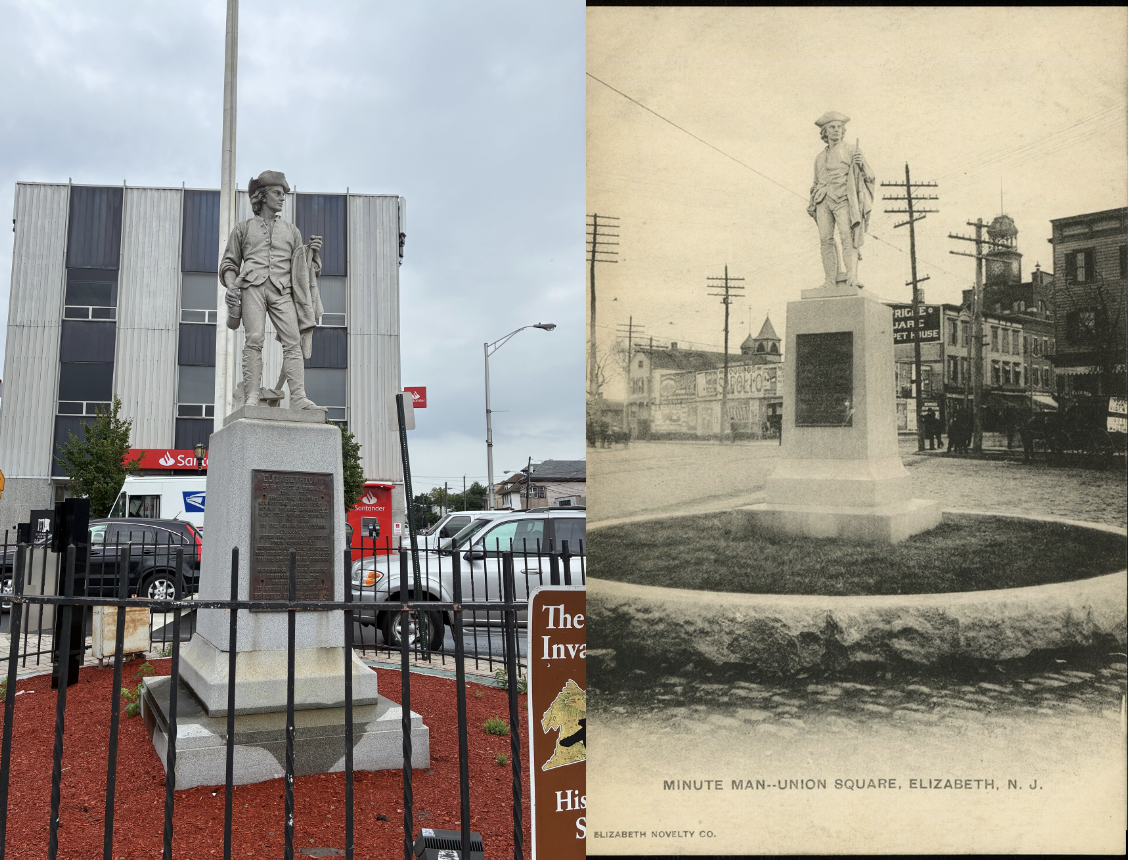
The Minute Men statue saw Mother Jones speak in 1903 and remains at Union Square.
Mother’s Army received a warm welcome at this spot in Elizabeth’s Union Square from Mayor Patrick Ryan, as well as local union leaders and Socialist Party leaders who hosted them at the labor hall. The marchers paraded through the city’s factory district and collected donations.
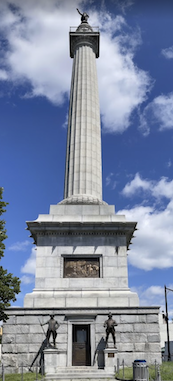
Mother spoke at Trenton’s Battle Monument.
Mother and the children spoke before the statue of the Minute Man, which remains as it did when they were here. The statue commemorates the routing in 1780 of 5,000 British Regulars by 15 Elizabeth Minutemen, who continued the battle as the British retreated to drive them out of New Jersey.
Speaking at the Minute Man statue site was likely no accident. Mother Jones also picked the Trenton Battle Monument, still towering there, as a speaking site. Mother’s Army events drew 5,000 Trenton folks who contributed $100 for the marchers.
For their Stony Brook stop, the children camped on the banks of Stony Brook River, and Mother reminded the newspapers and those who came to their events that their camping spot was the hallowed grounds where “the ragged Revolutionary Army camped, Washington’s brave soldiers that made their fight for freedom.”
Clever Calls at Coney Island
Mother Jones brought the children to Coney Island for shrewd reasons. She’d give the kids a fun-filled experience they’d never had before AND make their audiences see the contrast between the mill children and the carefree kids enjoying Coney Island joys.
She found that Frank Bostock, owner of the biggest Coney Island amusement park (located by what’s now the stomach-churning Steeplechase roller coaster and the Coney Island History Center), was sympathetic to her cause. Bosworth also wanted to drum up more business by trumpeting the arrival of Mother’s Army. His stadium was already filled before Mother started speaking.
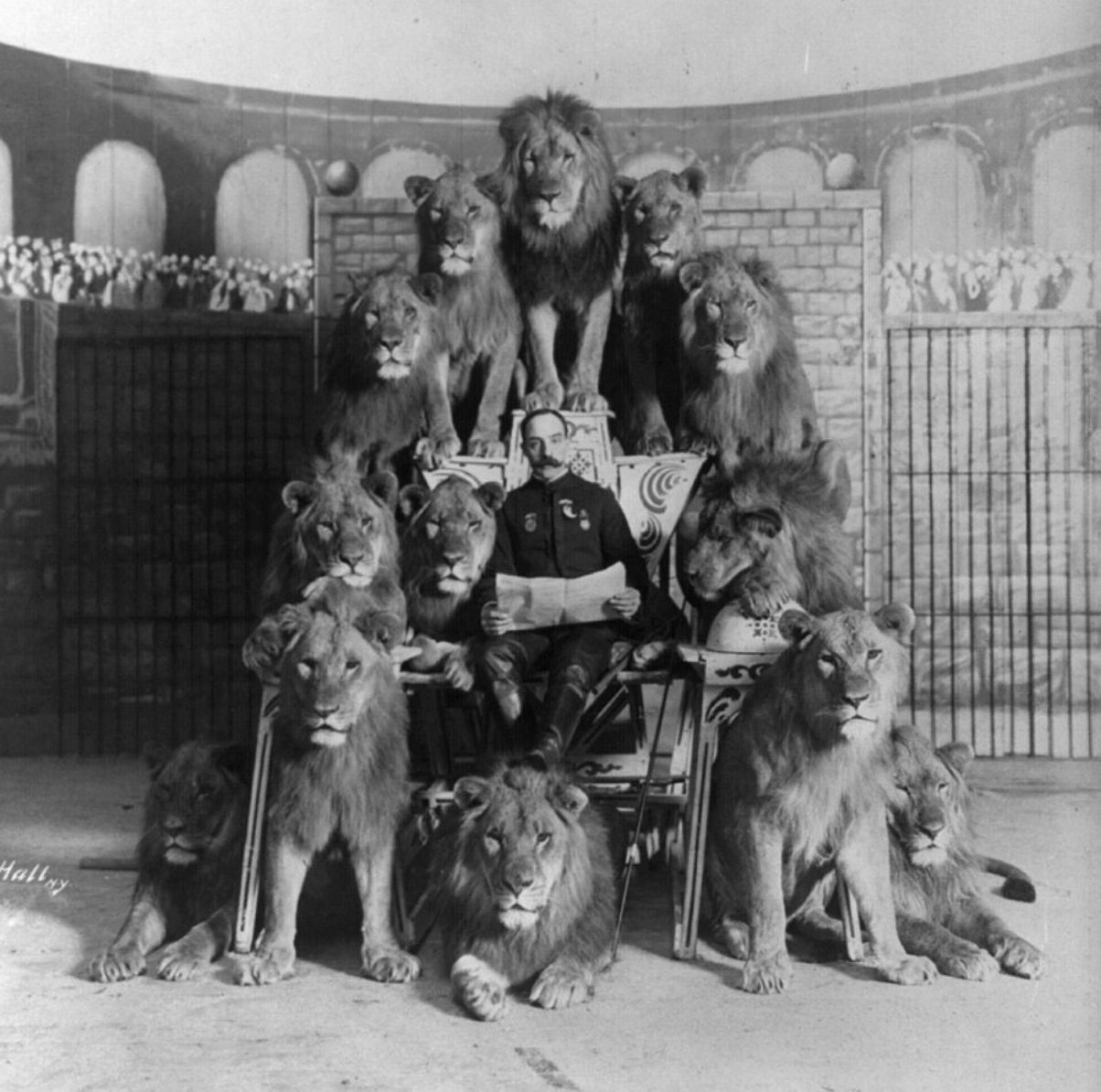
Frank Bostock with his lions
As the New York Times reported, right before Mother began speaking, Bosworth changed the scenery backdrop to a Roman Coliseum scene, with dueling emperors watching the carnage below. Mother said it showed the selfishness of the aristocracy and its modern day “aristocracy of employers.”
Bosworth had provided an empty lion cage, and Mother put some of the mill children inside the cage, as the real lions roared nearby. Mother Jones told the crowd that the caged children represent American employers’ attitudes toward their workers. She needed their help in her goal to persuade the President to “protect children against the greed of the manufacturer.”
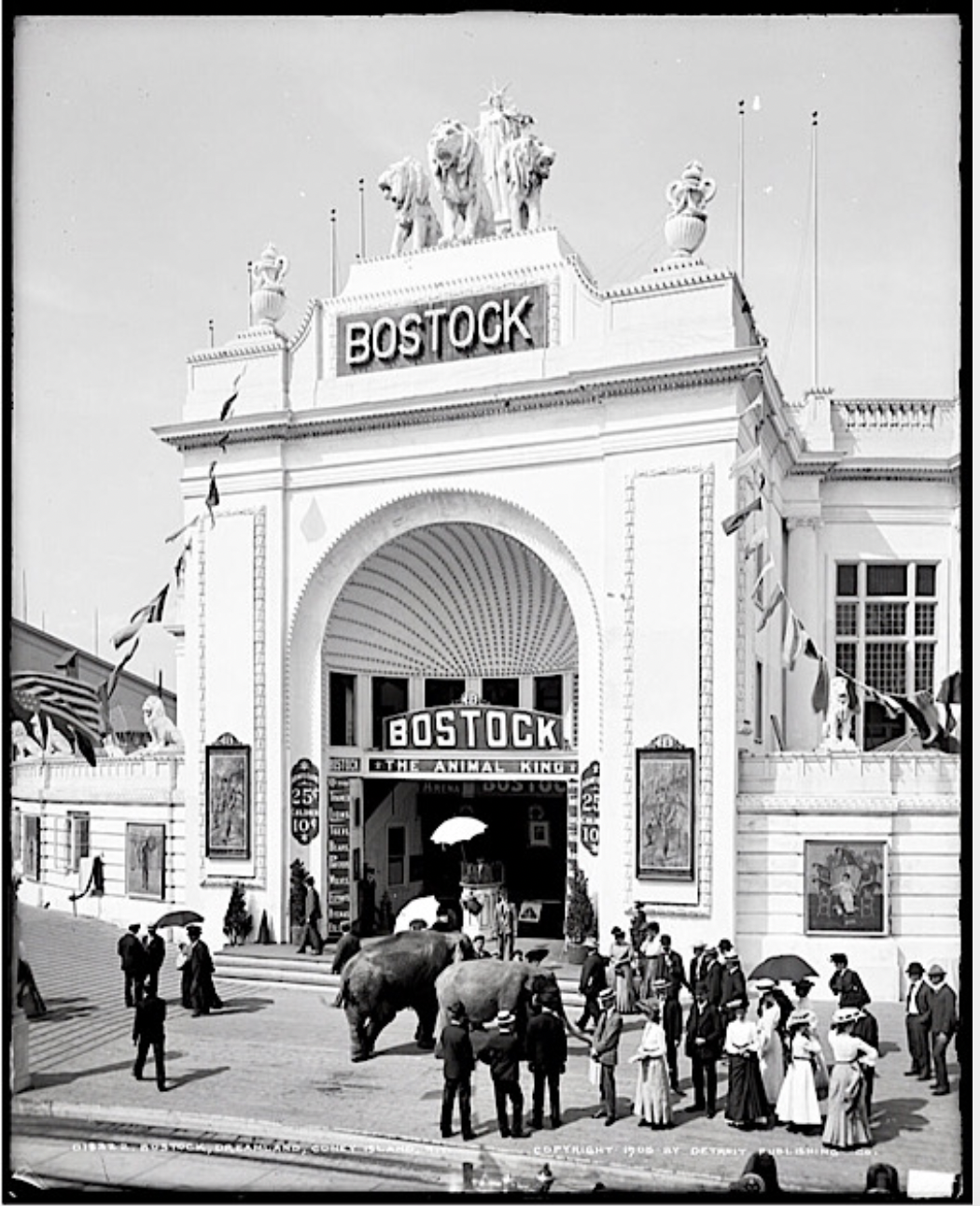
Bosworth also allowed the marchers to sleep in the loft of his animal palace during the children’s two-day Coney Island spree.
Manhattan Beach Escapades
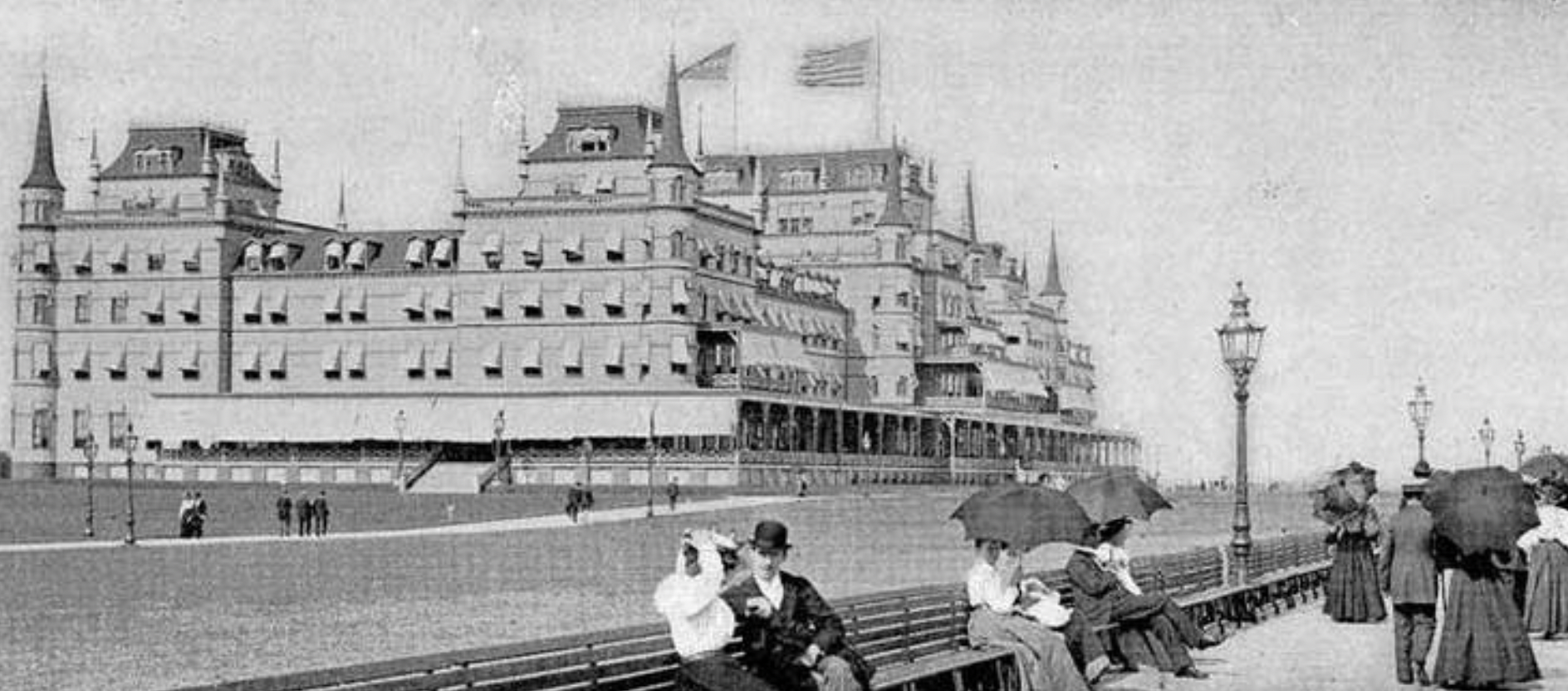
Mother’s Army enjoyed breakfast and a walk on the boardwalk at The Orient Hotel.
The fun for the children didn’t stop. Bostock arranged for Mother Jones to ride an elephant from Coney Island to the ritzy Oriental Hotel on the beach east of Coney. She had arranged to meet US Senator from New York Thomas Platt at the Oriental to buttonhole him about doing something about child labor. Platt panicked when seeing the elephant and Mother’s Army descend on the hotel, and dashed out to grab a trolley car to escape.
The hotel’s manager took pity on the ditched children, and offered breakfast to the whole troupe in a private dining room.
The site of the Oriental Hotel, long since razed, is a mix of residential and commercial buildings now. Only the name of Oriental Boulevard remains. The hotel was replaced in 1942 by the Maritime Training Station for Merchant Marines.
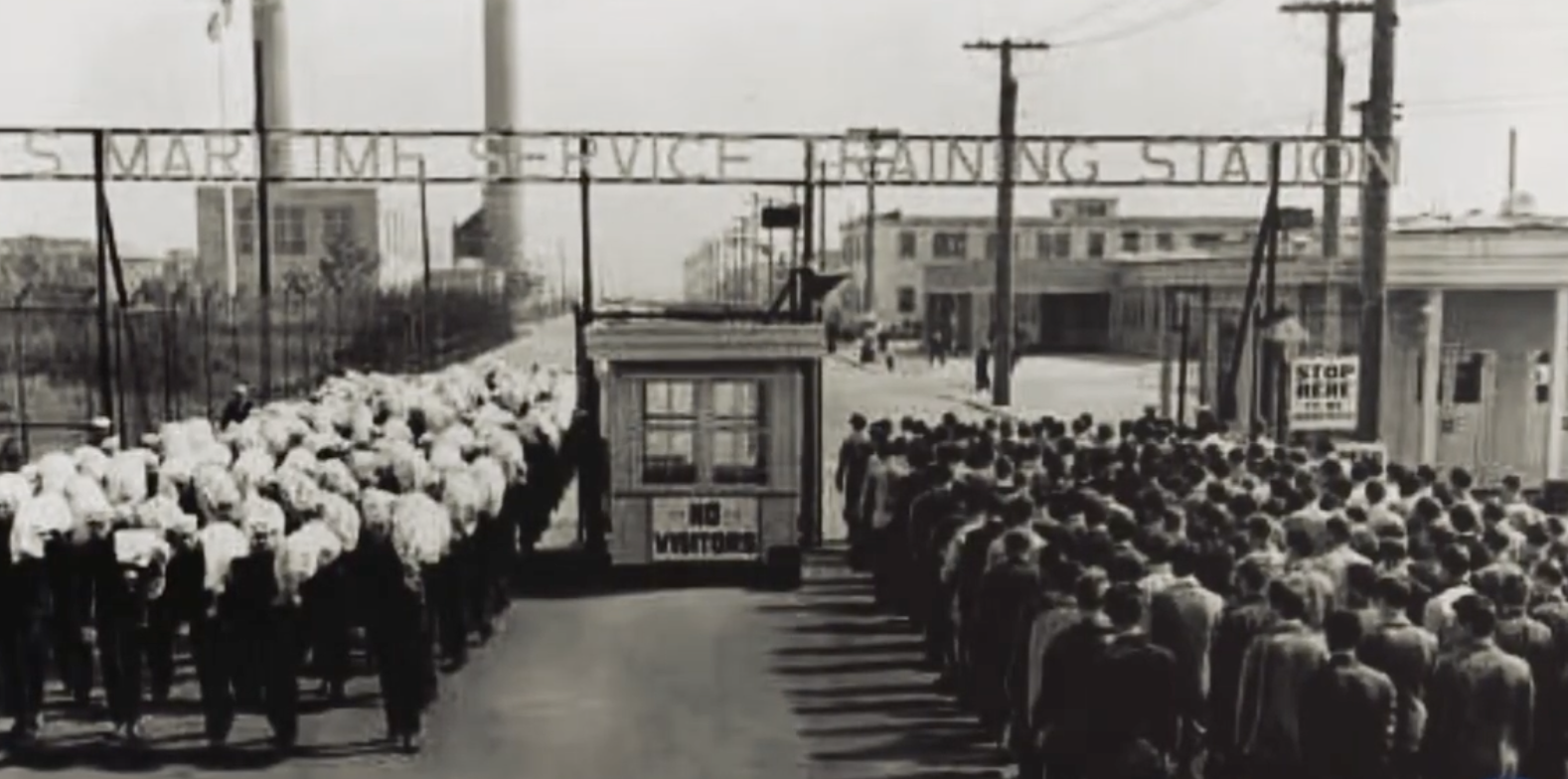
Fun fact: Poet Allen Ginsberg, author Ralph Ellison, and photographer Richard Avedon trained there, along with Olivia Hooker, the first Black woman to enter the Coast Guard.
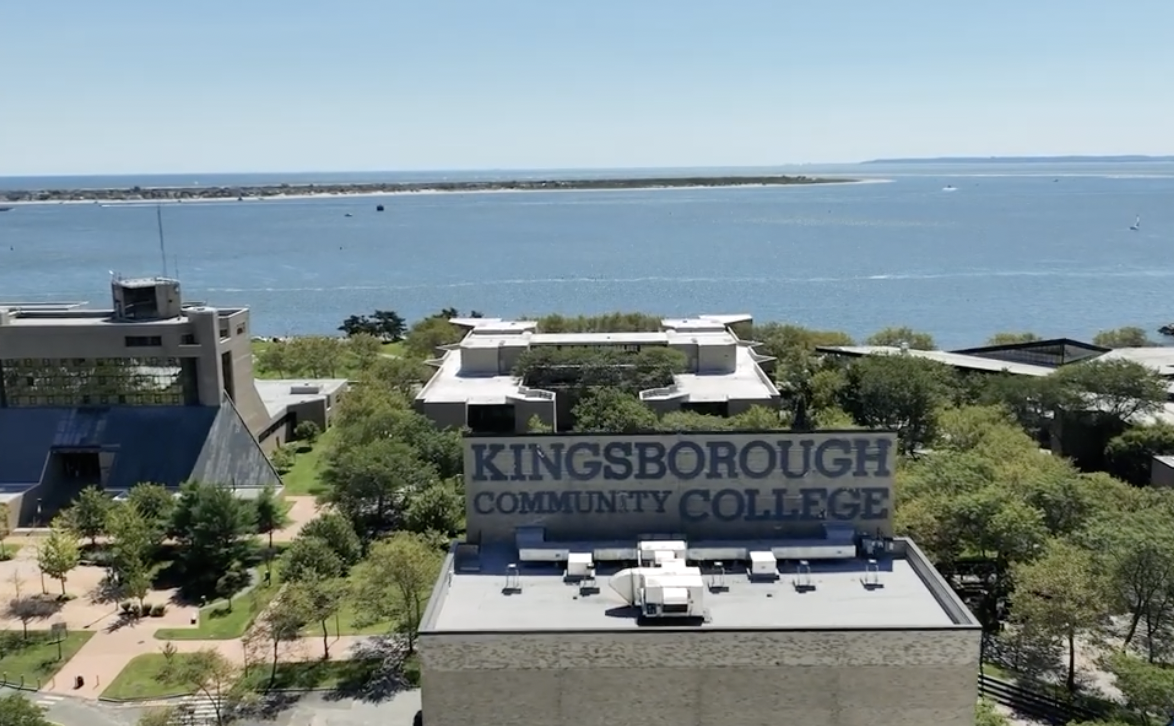
Kingsborough Community College educates a diverse community.
In the early 1960s, the controversial city planner Robert Moses pushed a plan to replace the Merchant Marine center with a park. But the neighborhood wanted a community college that served their diverse community. They got it in 1965 when Kingsborough Community College opened, and it continues to serve very diverse communities. Mother Jones would be happy to see this educational evolution of the Oriental Hotel area.
Long Island: Presidential Runaround
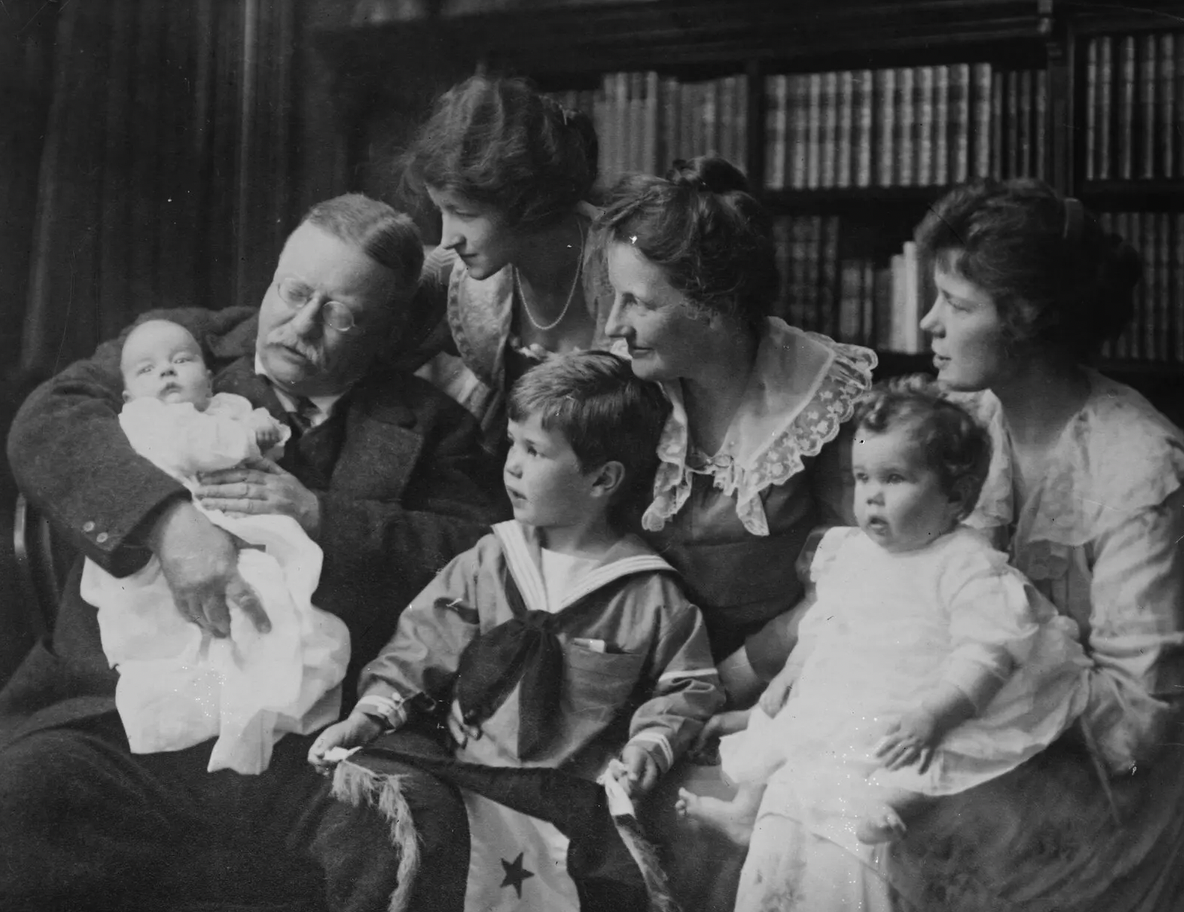
TR with his babies—and his secret female Cabinet
Mother’s Army continued their march to Long Island to meet with President Theodore Roosevelt at Sagamore Hill, the family’s summer retreat. In her speeches for the Crusade, Mother repeated that she was sure the President, a devoted father and grandfather, would see her and the children and push for federal laws restricting child labor.
She had been warned by TR’s secretary Benjamin F. Barnes that the Secret Service would be on the lookout for her and the Army, and would stop them before they got anywhere near the mansion. Barnes manned the President’s office in the heart of the hamlet of Oyster Bay, and served as the gatekeeper for all Sagamore appointments.
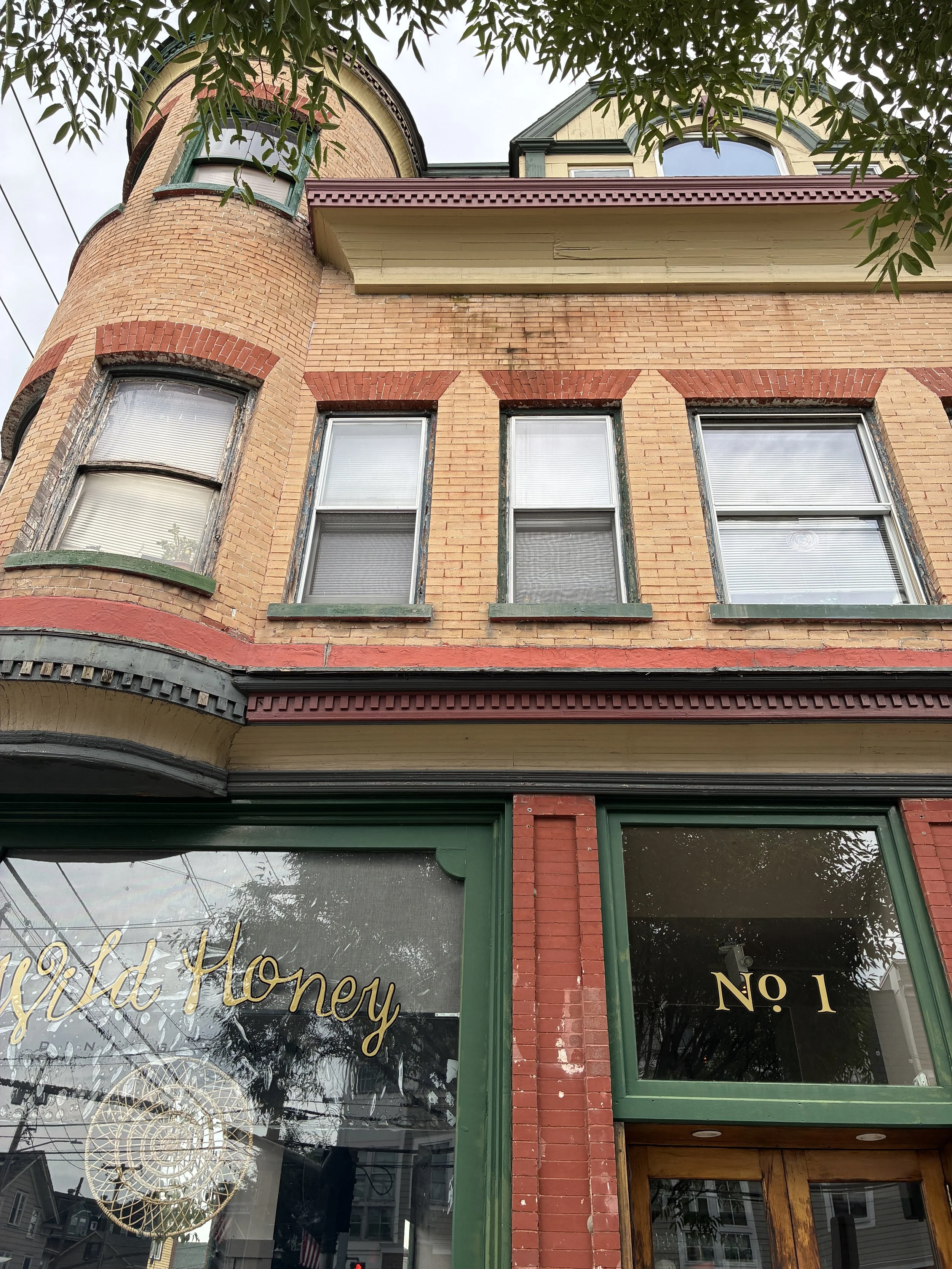
No appointments with the Pres approved here at this still-beautiful building.
As they got closer toward Oyster Bay, Mother and a few of the children and adults boarded a train, dressed in their neatest clothes. The adults and children got off at Oyster Bay, and Mother looking like a respectable older lady, got off a bit after them. No one, including the Secret Service, suspected them. Quietly, they walked a few blocks to this office building and met with Barnes.
Barnes insisted they wouldn’t be able to see the President, and that he’d pass on a letter to TR. The group left, boarding the next train.
Mother had already written two polite yet passionate letters—and shared them with newspapers. She had even invoked the Bible, pleading for Roosevelt to heed the words of Jesus, “Suffer little children to come unto me.”
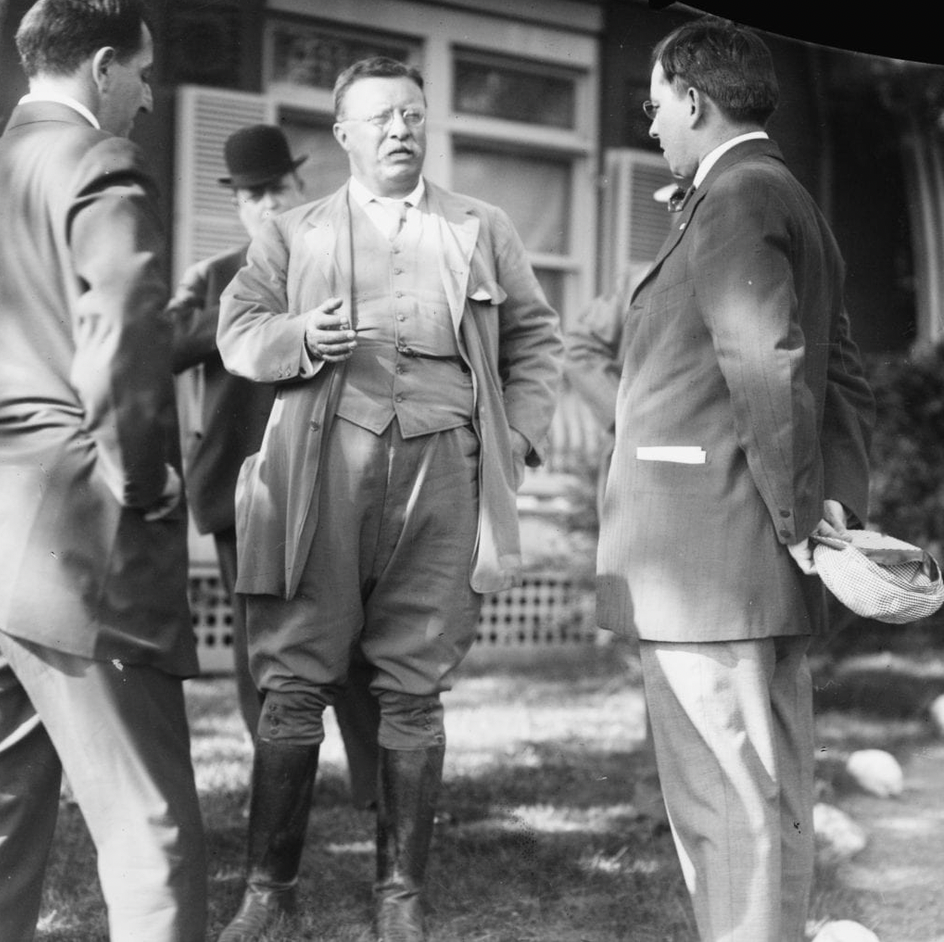
TR meeting at Sagamore with men of power and influence
Barnes responded to Mother’s letters, writing that the President had “the heartiest sympathies” for child laborers, but that he would not be able to enact any federal regulations, since these matters could only be regulated by states.
Many sympathized with Mother Jones over Roosevelt’s refusal to see the children. After all, as the New York Tribune reported, at the time the children were in Long Island, Roosevelt was having a delightful catered camp-out with his sons and nephews.
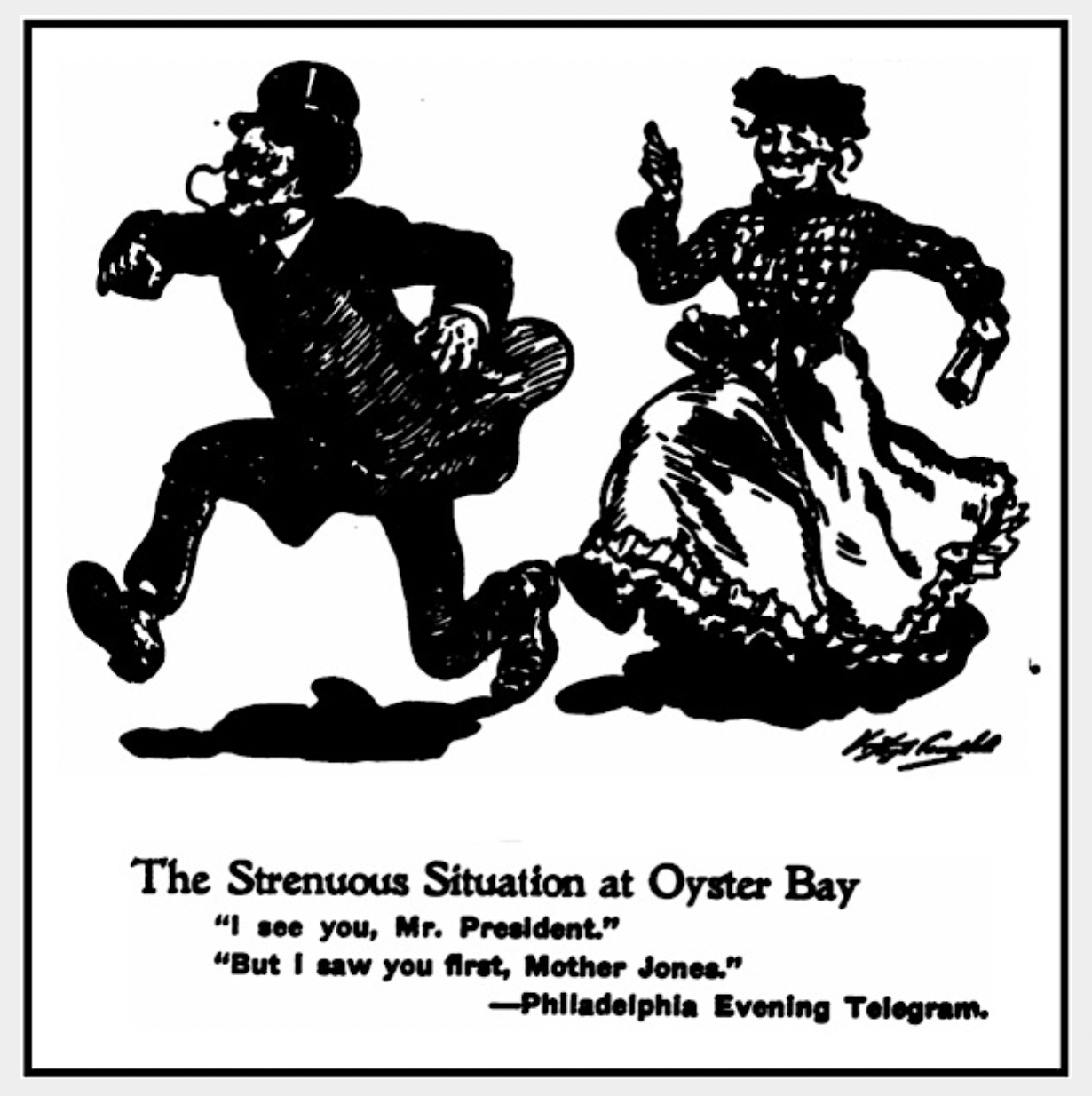
Mother’s Army headed back to Philadelphia, where sadly the textile strike buckled a few weeks later when hungry and desperate workers could not continue to hold out any longer.
Mother, who’d seen many defeats along with victories, put the Children’s Crusade in perspective this way: “Our march had done its work. We had drawn the attention of the nation to the crime of child labor.” The United Mine Workers Journal seconded that, writing that the Children’s Crusade “helped to give child labor a mortal stab, and though it will take plenty of time to kill the cruel monster that insists on feeding off the flesh and blood of little children, yet it is doomed.”
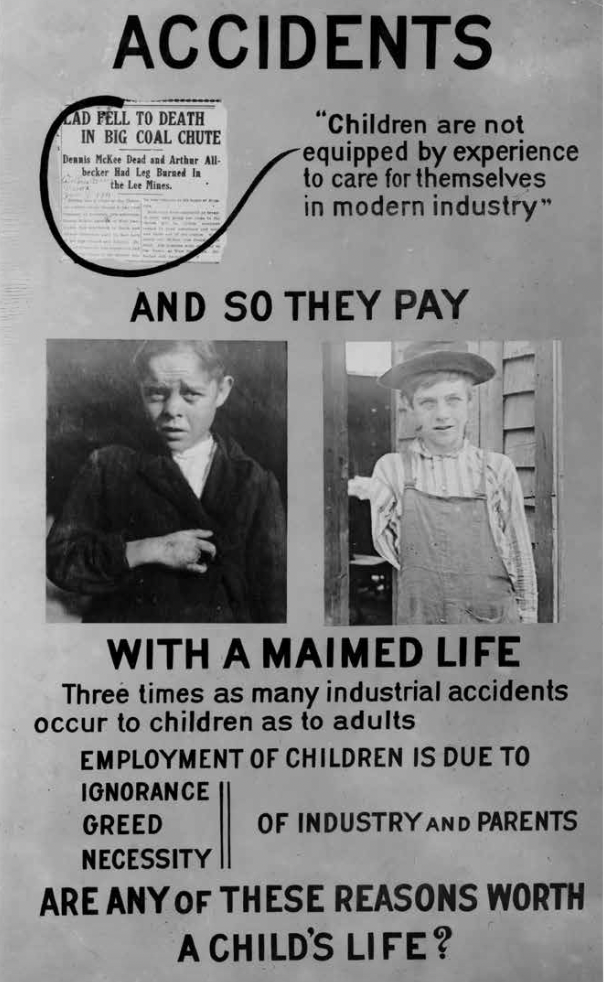
Lewis Hines changed minds with his images.
And state child labor laws began to change, thanks to the work of Mother Jones and her Army and other activists such as Florence Kelley and Jane Addams. In the following year, 1904, social reformers created the National Child Labor Committee, including a Pennsylvania chapter. They worked tirelessly to stop child labor.
The national committee hired photographer Lewis HInes, who worked as a child after his father died. His gripping photos of child workers across the US stirred citizens, as well as his posters decrying child labor..
After numerous attempts, Pennsylvania passed a meaningful law in 1915. Other states passed laws over the next few decades.
While the first federal child labor law was introduced in 1906, it took until 1938 for one to be finally enacted under President Franklin Roosevelt.
Thank Frances Perkins for that! FDR appointed her the first female cabinet member in 1933, and she worked for years on the Fair Labor Standards Act with its strong child labor provisions before pushing it through FDR’s signature in 1938. And be sure to salute her name when you pass by the Department of Labor building at 200 Constitution NW.
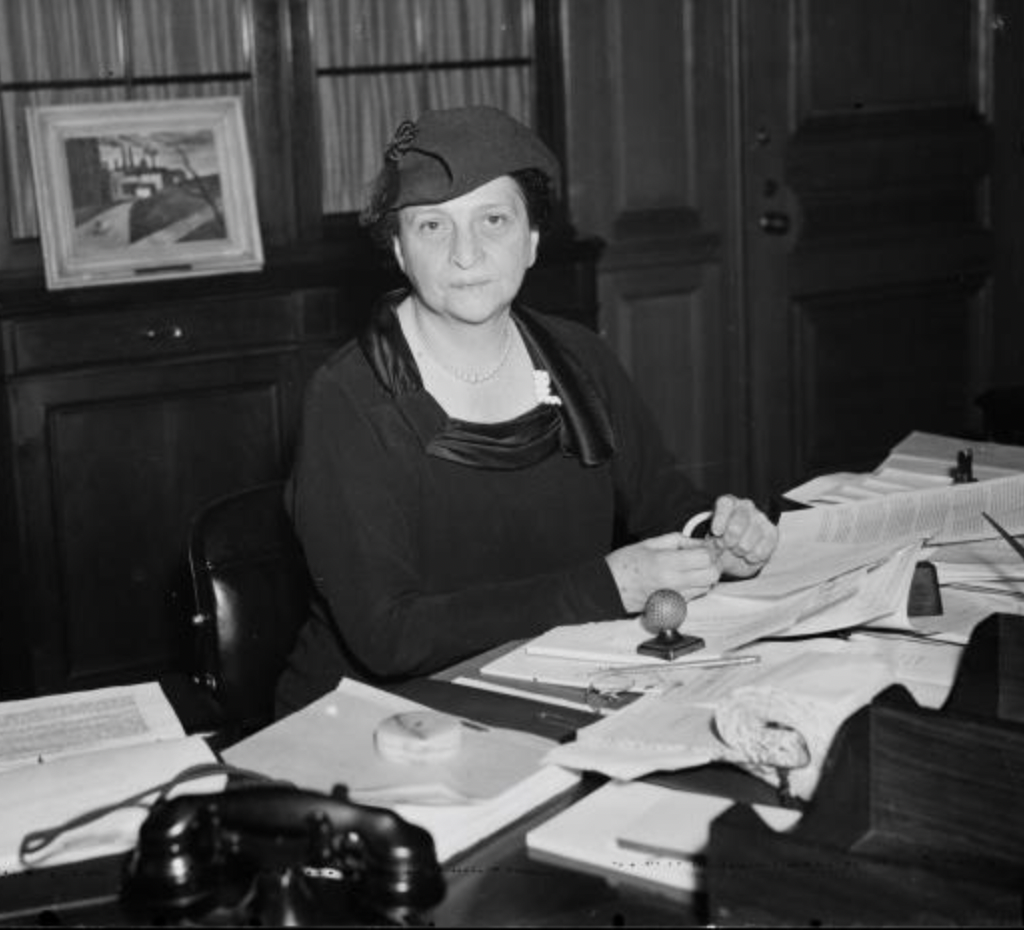
Frances Perkins also fought for workers—her name is on the Department of Labor building.
Mother Jones continued to fight against child labor. She led another children’s march in Charleston, West Virginia, in 1913 to protest the ongoing exploitation of child workers in the mines. This and other hell-raising there got her imprisoned. She continued to organize children and wives of male workers to carry on the battle.
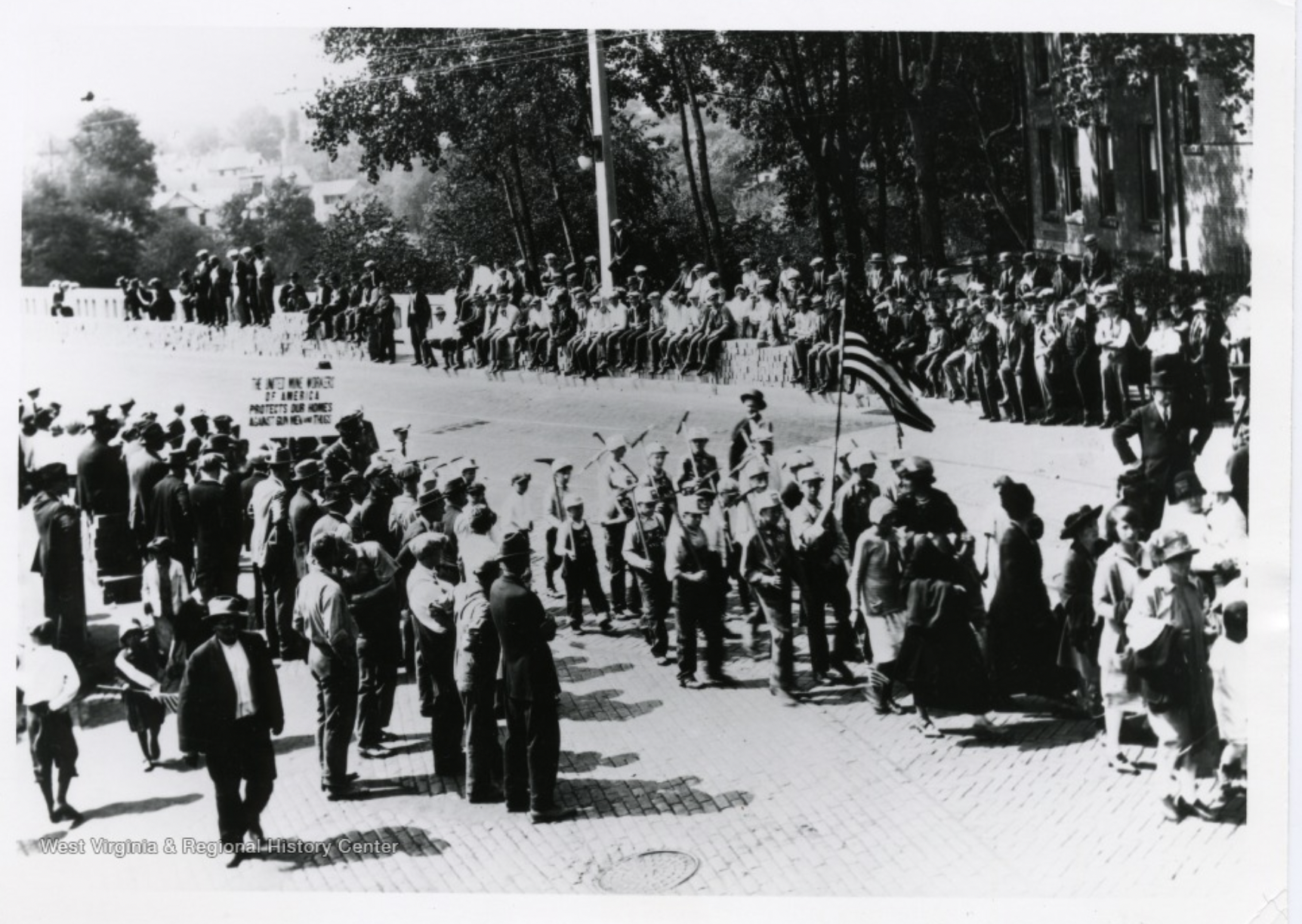
Mother Jones and the Children’s March in Charleston, West Virginia, 1913
And most powerful of all, children and adults continue ever since to be inspired by Mother Jones. These children were part of the work of the “Daughters of Mother Jones” in West Virginia.
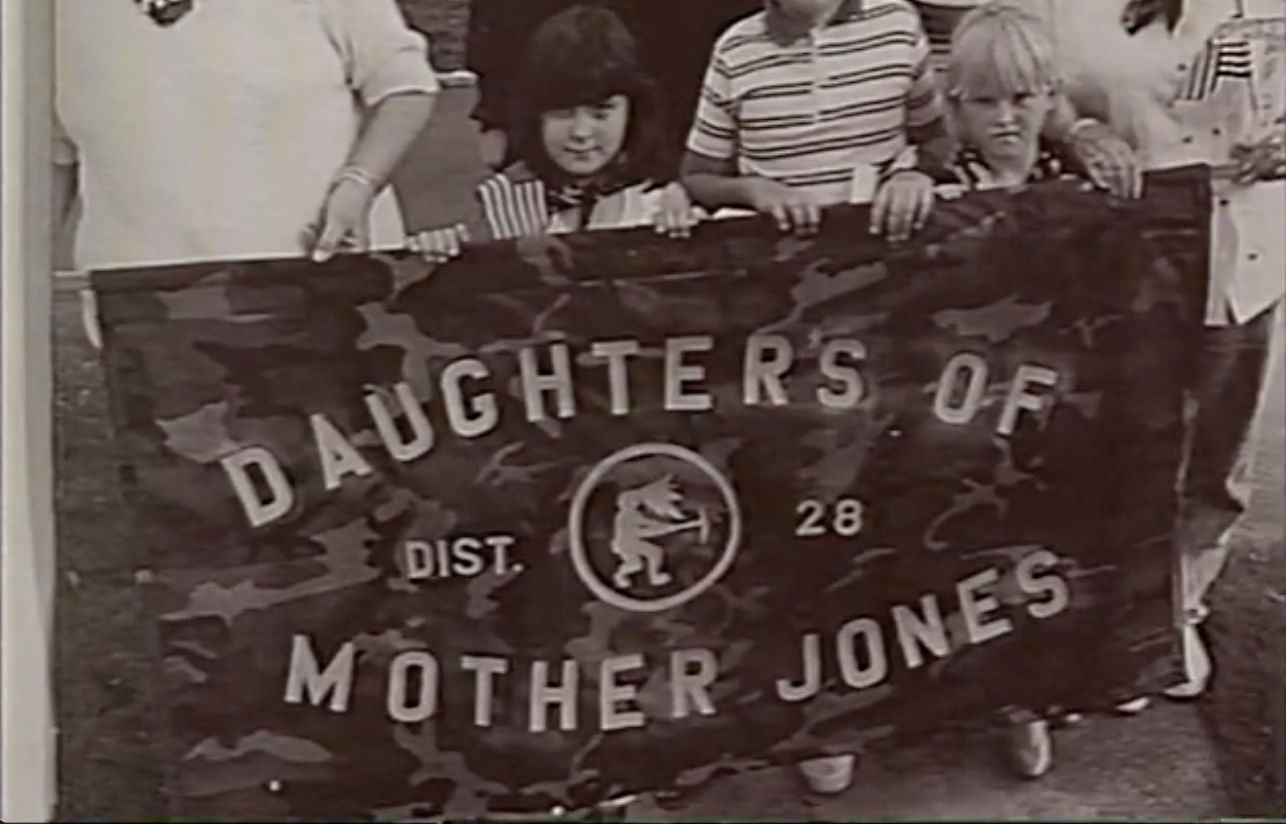
Children joined the strike support in Mother’s name in Pittston, Pennsylvania.
In 1989, 40 women walked into the headquarters of Pittston Coal Company and refused to leave until the company signed a new contract with striking miners. They occupied the offices of the coal company for 36 hours before being removed. They refused to give their names to police or media, responding only that they were the Daughters of Mother Jones.
The women and other family members were crucial to that battle for decent wages and health care, conducting sit-ins on roads used by Pittston and doing “rolling blockades” by driving very slowly on roads used by coal trucks to slow down production. They’d show up religiously to picket.
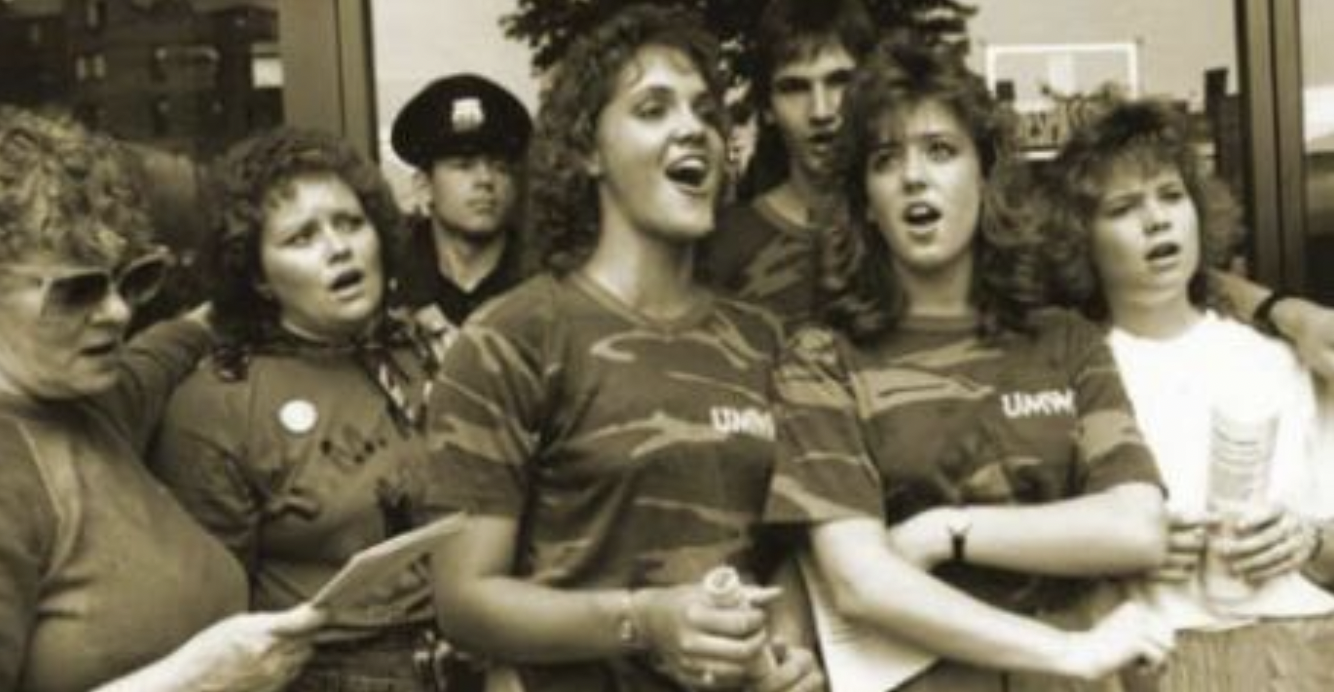
The Daughters of Mother Jones supercharged the 1989 Pittston strike.
Their actions inspired women from around the country to join in a United Mine Workers of America Freedom Fighters campaign, cooking meals, organizing phone trees, and supporting families of strikers struggling to make ends meet. In 1990, the UMWA miners won a new contract with the Pittston Coal Company.